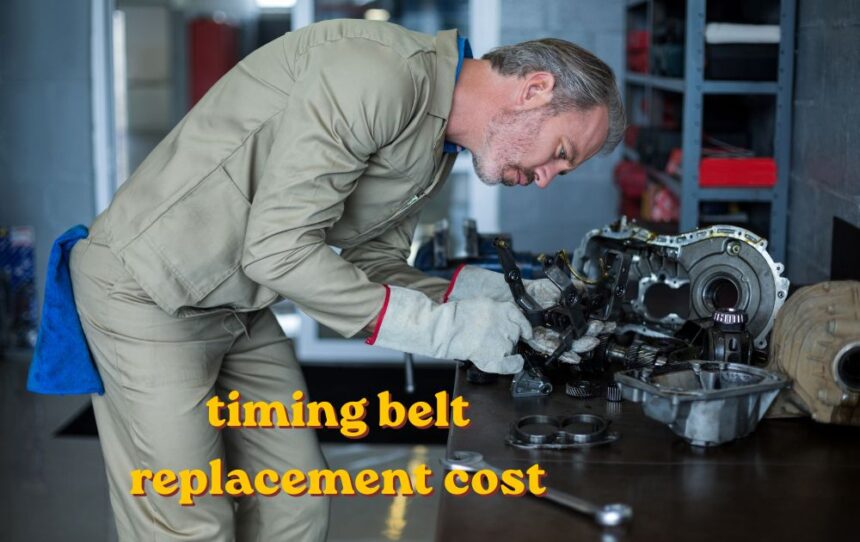
Timing belt replacement cost is the first thing every driver searches for once a mechanic mentions this job.
I have paid for this repair on my own car more than once, and I know how confusing the pricing can feel at first.
This guide breaks the whole topic down in plain, simple English so you know exactly what to expect.
A timing belt sits quietly inside your engine, doing a job most drivers never think about until something goes wrong. Once it fails, the bill can jump fast.
Understanding the real numbers ahead of time helps you plan your budget properly.

What Is a Timing Belt and Why Does It Matter?
A cambelt sits deep inside your internal combustion engine, keeping everything working together.
It synchronizes the crankshaft and the camshaft, so the engine cycle runs the way it should.
As the crankshaft turns, it drives the cambelt, which then rotates the camshaft and controls the opening and closing of your engine’s valves.
This precise timing stops the pistons and valves from meeting each other.
Most belts come from rubber with reinforced fibres built in, so they handle high temperatures and constant stress from daily driving.
Over time, even a strong belt wears down.
A worn timing belt or a broken timing belt can lead to real engine damage, and in bad cases, severe damage that hurts the whole performance of the car.
Some modern cars use a timing chain instead, which tends to be more durable.
That is exactly why your car’s manufacturer sets a schedule to replace the cambelt before things go wrong.
Skipping this step is one of the most common mistakes drivers make, simply because the belt stays hidden and easy to forget about.
Timing Belt Replacement Cost Explained
The average cost for a timing belt replacement usually lands around £430, though this shifts depending on your car’s make, model, and age of vehicle.
This figure includes both labour and replacement parts.
The data comes from WhoCanFixMyCar in July 2026.
Separate industry data tells a similar story, showing that most jobs fall somewhere between £300 and £700, based on the vehicle and how much work the labour actually involves.
A lot of the timing belt replacement cost comes down to access.
On many cars, the belt sits behind covers, pulleys, and engine mounts. A mechanic has to strip parts away just to reach it, which pushes up the labour cost.
Getting an exact quote from a vetted mechanic before booking anything helps you avoid surprises, whether the work happens at your home or your workplace.
On the lower end, some jobs cost as little as £200, while others run past £500.
To give a clearer picture, here is what owners typically pay by model.
A Ford Fiesta lies between £300–£500, a Vauxhall Corsa lingers around £300–£550, and a Volkswagen Golf mostly values £400–£650.
An Audi A3 tends to run £450–£700, a Honda Civic sits between £350–£600, and a Nissan Qashqai can reach £380–£700 depending on the garage you choose.
Timing Belt Replacement Cost by Manufacturer
Prices change a lot once you compare brands side by side, and this is where the manufacturer really shapes the final timing belt replacement cost.
For an Audi, expect somewhere between £554 and £587 for a timing belt replacement cost.
BMW owners see the widest gap of all when it comes to timing belt replacement cost, with prices ranging from £733 all the way up to £1414 in some cases.
Citroen sits lower, between £447 and £622, while Fiat keeps its timing belt replacement cost relatively affordable at around £409.
Ford owners pay between £472 and £715, and Kia’s timing belt replacement cost tends to land near £420.
Mercedes replacement costs jump between £639 and £758, and MINI owners often face the highest timing belt replacement cost, close to £783.
Nissan sits between £534 and £672, Peugeot ranges from £457 to £724, and Renault’s timing belt replacement cost typically falls between £654 and £662 depending on parts used.
Rounding out the list, Vauxhall keeps its timing belt replacement cost budget-friendly at £395 to £617, Volkswagen ranges from £467 to £562, Land Rover sits around £502, and Toyota comes in near £616.
These figures are rounded to the nearest whole number and give a fair starting point before you get a personal quote.
When Should You Replace a Timing Belt to Control Cost?
Most vehicle manufacturer guidelines suggest a replacement schedule somewhere between 40,000 and 100,000 miles, though 50,000 miles is a common middle ground for many brands.
This depends heavily on your car’s make and model, along with the age of timing belt itself, since rubber degrades over time even if you barely drive the car at all.
Some brands recommend swapping the belt every 5–10 years regardless of mileage, so check your owner’s manual for the exact figure that applies to your vehicle.
If you bought the car used and are unsure, a local garage or qualified mechanic can check the 60,000 mile mark and beyond to confirm whether the belt needs inspected attention.
Waiting too long risks unexpected failure, which turns a routine job into an expensive emergency and drives up your final timing belt replacement cost significantly.
Signs of a Faulty Timing Belt Before Cost Rises
Your engine often gives warning signs before a belt fully fails.
Listen for ticking noises or clicking sounds, since these usually point to engine problems brewing underneath the surface.
You might also notice poor performance or a rough-sounding engine, along with hard stalling and a sudden loss of power while driving on the road.
Physical signs matter too. Timing belt slipping often comes with visible damage like cracks, fraying, or even missing teeth on the belt itself.
Once the belt wears further, you may hear a ticking sound or slapping sound, and this often means the valves and pistons out of sync, which can lead to misfiring.
A loose timing belt sometimes causes stalling repeatedly, and in worse cases, a vehicle refusing to start altogether without any clear reason.
Watch for rough idling too, where the car shakes, bounces, or wobbles at a standstill.
Mechanics also check for cracking or a belt that sits incorrectly aligned.
Other clues include an engine light onthedash, oil leaking near a damaged cambelt cover, and issues that are not simply battery issues.
Left unchecked, all of this leads straight to engine damage.
What Happens When a Timing Belt Breaks?
When a belt actually snaps, the engine stops immediately, and drivers often notice the steering feels heavy right away. The brake pedal also needs more pressure than usual.
This kind of timing belt failure rarely gives warning, so following official breakdown advice on what to do if your car breaks down matters a lot for your safety.
There is usually no pre-warning before the belt decides to snap, and it can happen at initial startup or while cruising down the motorway at speed.
Once it breaks, the pistons collide with the valves, and this can damage the rocker arms, camshaft, and even the cylinder head underneath.
At that point, a mechanic often needs to provide a custom quote after a full damage assessment, since nobody can guess the true cost until the engine gets opened up properly.

How to Avoid a High Timing Belt Replacement Cost
Regular servicing stays the best defence against a failed belt and a surprise timing belt replacement cost later on.
A qualified mechanic checking for signs of wear and faults during routine visits catches problems early.
Always keep track of your vehicle’s service history, and note down when the timing belt last changed, since this record helps any garage confirm what work is actually due.
Why Has My Timing Belt Broken Despite Regular Checks?
Wear and tear remains the leading cause behind most failures.
Over the years, the fibres inside the belt weaken, which eventually leads to belt snapping or belt jumping off its track.
This is not only about mileage either, since age-related wear plays a huge role too.
A belt that is 10 years old with under 50,000 miles can fail just as easily as one that has covered 100,000 miles in only five years.
Time alone makes a belt more susceptible to failure, which is why manufacturers set both a mileage limit and a year-based limit for replacement.
What Does a Timing Belt Replacement Involve?
The job starts with a lift or jack to raise the car so the mechanic can work underneath it safely.
From there, they remove engine covers and drive belts to reach the timing area.
The mechanic carefully notes the timing marks before the old cambelt removed comes out completely, so nothing gets misaligned during the process.
Before fitting anything new, a good mechanic inspects the water pump, tensioner, and idler pulleys, since worn components replaced at this stage save you a second labour bill down the line.
Once the new cambelt fitted sits correctly, they adjust the belt tension to match the manufacturer’s specifications exactly, before running a full check.
After that, the mechanic reassembles parts and runs an engine timing check to confirm everything runs smoothly.
This job is best left to a professional mechanic, since nicks or small damage to belt during handling can prove catastrophic later.
What Affects the Cost of Timing Belt Replacement?
Several things shape your final bill. The vehicle make and model matters most, since the position of timing belt varies a lot between different engines.
On some cars, mechanics remove engine mounts and covers just to get started, and that extra labour time adds up quickly to raise the overall price.
Parts play a role too. Most garages fit a full timing belt kit, including tensioners and idler pulleys, and choosing OEM parts can raise the price further still.
A typical job takes between 2 to 5 hours, depending on the engine layout and how easy the belt is to reach inside the engine bay.
Water pump replacement often happens at the same time if the pump shares the belt drive, along with fresh engine coolant added afterward.
Finally, engine size and mechanical complexity come into play, since larger engines and performance vehicles tend to have more complicated timing systems, which naturally costs more to service.
Why Timing Belt Replacement Can Be Expensive
The belt itself sits inside the engine, right next to the crankshaft and camshaft, and reaching it means removing several engine components first.
While the belt is fairly relatively inexpensive on its own, the labour required to access it drives up the total repair cost by quite a margin overall.
The easiest way to check pricing for your own car is to enter your car registration and postcode online, which gives you upfront pricing through an instant quote rather than guessing.
What Does a Timing Belt Replacement Cover?
A standard quote usually includes the full timing belt kit, made up of the belt, tensioner, and guide(s), often from trusted brands like INA, Dayco, or Gates.
It also covers fitting of parts and disposal of old parts, plus VAT where it applies, backed by 12 months warranty on the completed work.
If your car falls under the timing belt and water pump engines category, the quote extends further to include the water pump itself, along with fresh engine coolant and antifreeze.
Cars that only need the belt fall under timing belt only engines, which keeps the job slightly cheaper overall for most drivers.
Should You Replace the Water Pump at the Same Time?
If your water pump is driven by timing belt movement, most mechanics treat it the same as the guide(s) and tensioner, meaning it gets replaced without question.
This makes sense, since a water pump failure shortly after would mean paying to redo the job all over again, which costs far more than doing it once.
While you are at it, swapping the auxiliary belt for a new belt often makes sense too, since it needs removing anyway during the work.
There is real cost saving here, because it becomes the ideal time to change it without extra labour charges stacking up on top of your bill.
FAQs
Timing belt replacement cost near me?
Prices vary by local garage, so get an exact quote from a vetted mechanic in your area before booking.
Timing belt replacement cost UK?
Across the UK, most drivers pay between £300 and £700 for a full timing belt service.
Timing belt replacement cost Corsa?
A Vauxhall Corsa timing belt replacement typically falls between £300 and £550 depending on the garage.
Timing belt replacement cost Fiesta?
A Ford Fiesta usually costs between £300 and £500 for a full cambelt change.
Timing belt replacement cost Vauxhall Astra?
Vauxhall models like the Astra generally sit close to £395 to £617, based on manufacturer pricing data.