I still remember the first time a customer asked me to explain the different types of hybrid vehicles on the market. I fumbled through it, mixing up a mild hybrid with a plug-in hybrid, and that moment pushed me to actually learn this stuff properly.
Years later, after test-driving dozens of these cars, I want to walk you through every type of hybrid out there, in plain language, no jargon.
What Are The Different Types Of Hybrid Vehicles?
A hybrid car isn’t one single thing. The various types of hybrid vehicles actually split into four main groups: mild hybrids, full hybrids, plug-in hybrids (often shortened to PHEV), and range-extended electric vehicles (REEVs).
Each one works in its own way, and that’s exactly why the pros and cons differ so much between them, from upfront costs to running costs to plain ease-of-use behind the wheel.
People often ask me which one suits them best, and honestly, the answer always comes down to function first. If you’re not ready to make the full switch to an electric vehicle, a hybrid gives you real flexibility.
You won’t get zero emissions, but you will get lower road tax and noticeably improved fuel economy, which adds up fast over a year of driving.
Electric vehicles keep climbing on UK roads, passing 1.8 million registered by early 2026, yet they’re far from alone out there; over 1 million plug-in hybrids share the road too, and their popularity is climbing just as quickly.
Think of a hybrid as the middle ground between old-school petrol or diesel motoring and full electric driving, a genuine compromise for anyone who isn’t quite ready to jump in with both feet.
New-car shoppers run into plenty of unfamiliar technical terms while researching the types of hybrid vehicles available, and it traces all the way back to the Toyota Prius, the car that turned the gasoline-electric idea into a genuine sales success.
That same Prius introduced everyone to the two-motor power-split parallel-hybrid system. The real question to ask about any hybrid-electric system is simple: can it run purely on battery power, or does the gasoline engine always have to stay switched on?
Parallel and series hybrids can manage electric-only running, and so can plug-in hybrids. Mild hybrids, on the other hand, can’t.
None of these terms mean much to most daily drivers walking into a showroom, with the possible exception of “plug-in hybrid.” Understanding the hardware behind each one helps you explore this world with real confidence rather than guesswork.
What Is A Hybrid Car?
So what actually is a hybrid? At its simplest, a hybrid electric vehicle (HEV) pulls power from two separate sources instead of one.
There’s a regular petrol or diesel engine, and sitting alongside it, an electric motor. The combustion engine generates the energy, and that energy gets sent over to drive the wheels.
A clever trick many of these cars use is regenerative braking, which captures energy that would otherwise vanish as heat every time you brake, and feeds it straight back into the battery instead of wasting it.
That’s exactly why these cars earned the nickname “self-charging” hybrids, since you never need to plug them into a power source to keep them topped up.
Put plainly, a hybrid vehicle simply blends petrol and electricity together, running off a normal combustion engine paired with a battery. That combination is what sets it apart from a pure electric car (an EV) on one side and an ordinary petrol car on the other.
Mild Hybrids
Out of every option among the types of hybrid vehicles, the mild hybrid feels closest to driving a normal petrol car, and that’s the first thing I tell anyone shopping for one.
The MHEV setup never lets the electric motor and combustion engine work apart; they move together as a pair, or not at all.
Twist the key, press the accelerator, and it’s really the engine and gearbox doing the heavy lifting, not the small electric battery sitting alongside them.
That battery exists purely to support the engine, drawing its energy from regenerative braking rather than ever powering the wheel on its own.
Fuel savings here stay modest but genuinely add up over time, particularly with stop/start technology doing its job in heavy traffic.
I’ve driven the Vauxhall Corsa and the Ford Puma back to back, and the difference in miles per gallon compared to their petrol or diesel alternatives is noticeable even on a short commute.
The same goes for the Kia Sportage, Peugeot 208, Citroen C5 Aircross, Dacia Sandero, and Mazda 3, all popular entry level picks for drivers stepping into hybrid ownership for the first time.
Under the hood, the electric motor in these cars sits between the engine and transmission, sometimes built into an integrated starter-generator system where one beefier component does double duty.
While the fuel economy benefits are far less dramatic than other types, that small battery pack still stores recaptured energy from excess engine power and gives the engine a useful boost, helping you avoid an unnecessary downshift.
Most of today’s mild-hybrid systems run on 48 volts, considerably more punch than a standard 12-volt system offers, yet still far cheaper to build than full hybrid systems running between 280 and 400 volts.
Full/Self-Charging Hybrids
A full hybrid, sometimes badged as a self-charging hybrid, behaves nothing like a traditional petrol car, and that’s where things get genuinely interesting.
Unlike the mild hybrid, this setup is powered directly by both a petrol engine and an electric battery, sending power straight to the wheels whether they’re working together or running solo.
I’d call FHEVs the most versatile among all types of hybrid vehicles because they can run purely on the combustion engine alone, switch to electric power by itself, or blend the two together depending on conditions.
That’s exactly why they earned the self-charging label, leaning on regenerative braking to keep the battery topped up as you drive without ever needing a plug or charger.
Most drivers notice the all-electric mode kicking in around lower speeds, roughly 30mph, while the combustion engine takes back the lead for longer journeys on the motorway since the battery simply isn’t built for long distance running.
If you want to hold onto a normal driving routine while still enjoying lower emissions than an ICE-powered car, the full hybrid route fits nicely.
You’ll spot this technology across the Nissan Qashqai, Toyota Corolla, Toyota Yaris, Toyota Aygo X, Honda Jazz, Renault Clio, MG HS, and MG3.
Run electric-only and you’ll cover short distances at low speeds before the petrol engine rejoins, which still beats a conventional petrol car comfortably in city driving.
Plug-In Hybrids (PHEVs)
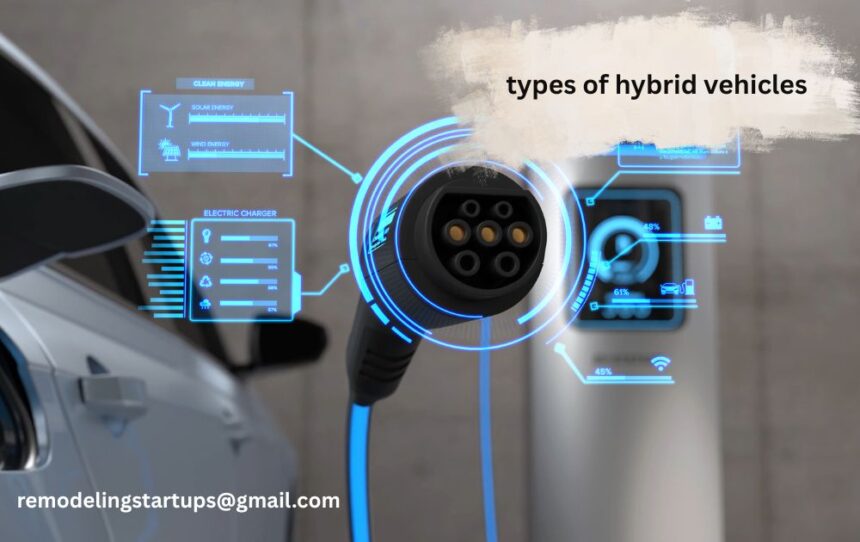
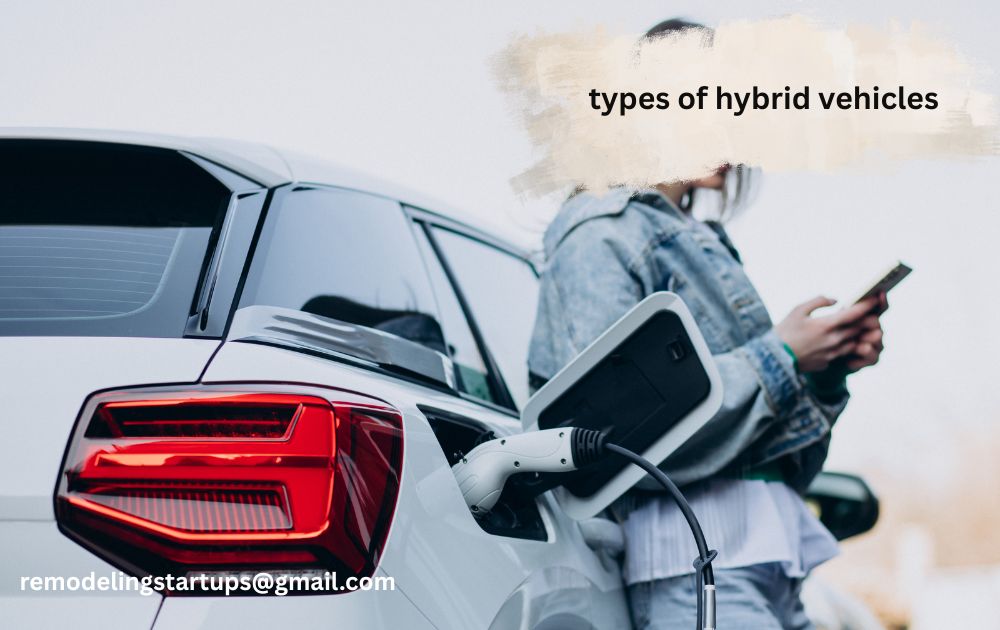
PHEVs, or Plug-in Hybrid Electric Vehicles, separate themselves from the other types of hybrid vehicles with one defining feature: you actually plug them in to recharge the battery.
That larger battery unlocks a genuinely useful all-electric range and hands you several driving modes to play with, which is brilliant for squeezing out maximum efficiency on any given drive.
Switching to all-electric mode the moment you enter a city or town helps you dodge Low Emission Zone (LEZ) charges entirely.
To feel the real benefit of owning a plug-in hybrid, you’ll want to charge it often, because cruising on petrol alone with all that extra battery weight onboard isn’t especially efficient.
Thankfully, charging has become straightforward, and you’ll now find plug-in options stretching from tiny city cars right up to family SUVs.
Popular picks include the BYD Sealion 5, BYD Seal U, Geely Starray EM-i, MG HS, Ford Kuga, Volkswagen Golf, and Toyota C-HR.
Explaining a plug-in hybrid properly takes a moment, but here’s the short version: it’s a regular hybrid wearing a much larger battery that you can plug into the grid, letting it behave like a genuine electric vehicle for a real distance.
EPA range estimates for 2024 stretch anywhere from 7 miles up to 51 miles. Chevrolet deserves credit for popularising this whole idea with the 2011 to 2018 Volt.
So many owners found the Volt could handle daily driving purely on electricity, only waking the engine for farther-away destinations.
Uniquely among PHEVs, the Volt delivered near-identical performance whether it ran on battery alone or as a regular hybrid once depleted. Most rivals lean on engines that outmuscle their electric motors, switching on whenever extra power is needed.
That frequency naturally drops as battery size and electric range climb, since a 40-mile range demands far more battery capacity than a 10-mile one.
Nearly every PHEV on sale today, including the Toyota Prius Prime, RAV4 Prime, and various Hyundai and Kia hybrids, builds on existing power-split hybrid platforms.
Stellantis skips conventional, plugless hybrids altogether, fitting plugs across its Chrysler Pacifica Hybrid and growing Jeep 4xe range instead.
Carmakers lean into plug-in hybrids partly to satisfy tightening zero-emission-vehicle requirements without footing the bill for entirely new battery-electric platforms.
Those EVs need packs between 60 and 100 kWh compared with just 10 to 25 kWh in a typical PHEV, though manufacturers still earn emission-free credit even if an owner never actually plugs the car in.
Stack a full hybrid car against a PHEV and the differences sharpen further: both switch between engine and battery independently or together to send power to the wheels.
The plug-in’s bigger battery and access to a charging point stretch its electric-only mode across 30 to 60 km, versus the full hybrid’s brief burst at low speed before its small battery runs dry and needs charging only internally.
Plug-in hybrids can stretch that electric-only stint as far as 37 miles without burning a drop of petrol, trimming fuel costs nicely for anyone covering shorter daily trips.
Expect to pay more upfront than you would for a full hybrid, which suits drivers without EV charger access making short trips around town, while the plug-in suits anyone wanting to travel further on electric-only power alone.
Range-Extended Electric Vehicles (REEVs)
The newest among all types of hybrid vehicles, a range-extended electric vehicle pairs an electric battery with a small range extender, usually a compact petrol engine.
This engine steps in purely to provide back-up power once the battery depletes. These cars are electrically driven through and through, since the range extender never sends power directly to the wheels.
Its only job is recharging the battery behind the scenes. REEVs remain genuinely rare on the market right now, with the Mazda MX-30 standing out as the most recognisable example you’ll actually find at a dealership today.
Find Your Hybrid Car At Vertu Motors
If cutting fuel costs, trimming your road tax, and chasing better fuel economy all sound appealing but going fully electric still feels premature, a hybrid genuinely could be your best move right now.
At Vertu Motors, our range spans mild hybrids, full hybrids, and plug-in hybrids, all built around the latest design and driving technology, so finding your perfect hybrid shouldn’t take long.
Browse our latest offers whenever suits you, then book an appointment at your local dealership for a proper test drive.
Still unsure? Our frequently asked questions below should clear things up, or pay a visit to our electric and hybrid cars hub page for a deeper look at how electric cars actually differ from hybrid cars.
Parallel Hybrids
A parallel hybrid system lets both the engine and the electric motor drive the wheels, either together or separately.
Toyota deserves the credit here, having first wired this system into a Japan-market Prius way back in 1997, running off two motors positioned between the engine and front wheels, powered by a modest 0.8 to 1.4 kilowatt-hour battery pack.
That “power split” label simply means both power sources combine into one single torque output heading to the wheels.
Under light loads and lower speeds, one or both motors can carry the car while the engine sits off entirely, only kicking on again once more power is genuinely needed.
The real magic sits in regenerative braking, turning a motor into a generator the instant you slow down, recapturing energy that would simply vanish as brake heat.
Under ideal conditions, you can claw back as much as 30 percent of spent energy, which explains the genuinely impressive real-world fuel economy numbers.
That’s 40 to 55 miles per gallon in a Toyota Prius and close to 40 mpg in a Honda CR-V Hybrid, with efficiency peaking during stop-and-go traffic that allows maximum electric-only running.
Both electric motors and the engine connect through a planetary gear set rather than a conventional transmission, allowing continuously adjustable gear ratios.
The car’s control algorithms rebalance power between battery and engine dozens of times a second to maximise electrical use and minimise burned fuel.
After close to three decades refining this, Toyota’s software algorithms now make these handovers so seamless that drivers and passengers rarely even notice the engine clicking on and off.
Series Hybrids
A series hybrid strips things down to a far simpler concept among the types of hybrid vehicles: whenever the car demands more power than the battery alone can supply, a gasoline engine fires up purely to spin a generator.
That generator tops the pack back up, and crucially, that engine torque never touches the wheels mechanically; the wheels answer only to electric motors.
It’s the same principle diesel-electric railroad locomotives have relied on for decades, and it shines brightest at steady vehicle speeds where the engine can settle into its most efficient, preset engine speeds.
A typical passenger road vehicle demands power across a far wider spread, from gentle steady-speed cruising clear up to maximum acceleration, and that swing punishes batteries hard.
That’s exactly why series hybrids generally need higher battery capacity than conventional hybrids.
Genuine series hybrid passenger vehicles have been thin on the ground in the States: think the BMW i3 REx with its range-extending two-cylinder engine bolted onto the battery-electric i3.
The elegant Fisker Karma and its successors, the Karma Revero and GS-6, both sleek four-door luxury sedans, and the Ram 1500 Ramcharger, a genuine full-size pickup truck, prove this layout works at scale too.
What Are The Differences Between Full Hybrids And Plug-In Hybrids?
Full hybrids and plug-in hybrids share plenty in common, yet a handful of genuine key differences still separate them once you dig into these types of hybrid vehicles.
Both lean on a combination of petrol engine and electric battery, switching between the two as needed, though a full hybrid’s smaller battery charges itself while a plug-in hybrid’s larger battery needs an EV charging point to top up properly.
That difference shows up clearly in electric-only driving range: a full hybrid only manages short distances at low speeds before its small battery runs dry, while a plug-in hybrid stretches that out to 30 through 60 km thanks to its beefier pack.
Naturally, you can’t plug a full hybrid into any EV charging point since its battery only charges internally, whereas a plug-in hybrid battery genuinely needs that plug connection.
On fuel efficiency and costs, full hybrids shine in stop-start conditions, making them a smart pick for city traffic, yet plug-in hybrids can run up to 37 miles purely electric-only.
This cuts fuel costs further still for anyone doing shorter distances regularly, and while full hybrids generally cost less upfront, plug-in hybrids tend to ask for more at purchase.
As for suitability, full hybrids suit different drivers without home EV charger access making short trips around town, while plug-in hybrids suit anyone wanting to travel further purely on electric-only power.
Conclusion
Choosing between the different types of hybrid vehicles really comes down to how you drive day to day, what you can charge at home, and how much you want to spend upfront.
Whether it’s a mild hybrid, a full hybrid, a plug-in hybrid, or a range-extended electric vehicle, there’s a genuine fit out there for almost every driver. Take your time, think about your real daily driving, and you’ll land on the right one from these types of hybrid vehicles with confidence.
FAQs
What types of hybrid vehicles does Toyota make?
Toyota builds mild hybrids, full hybrids, and plug-in hybrids like the Toyota Prius, Prius Prime, Corolla, and RAV4 Prime.
Which type of hybrid car is best?
A full hybrid suits city driving and short trips, while a plug-in hybrid wins if you want longer electric-only range and lower fuel costs.
What is the difference between series and parallel hybrid vehicles?
A series hybrid uses its engine only to recharge the battery, while a parallel hybrid lets the engine and electric motor power the wheels together.
How many types of hybrid cars are there?
There are four main types: mild hybrids, full hybrids, plug-in hybrids, and range-extended electric vehicles (REEVs).
What are the advantages and disadvantages of a hybrid car?
A hybrid brings lower road tax and improved fuel economy, but a plug-in hybrid costs more upfront and still needs regular charging.