Meaning of a hybrid car comes down to one simple idea once you break it past the jargon. Most people hear the word “hybrid” and picture something complicated, but it’s actually straightforward. A hybrid car runs on two power sources working as a team, an internal-combustion engine and an electric motor. That pairing is what gives the car its split personality on the road.
In the US, almost every hybrid you’ll meet burns gasoline rather than diesel, since diesel hybrids are mostly stuck in locomotives and other heavy-duty applications rather than family cars. You never plug them in, because there’s no external power source involved. Instead, the small high-voltage batteries get refilled by the car itself.
Understanding the meaning of a hybrid car really starts here, with this simple idea of two systems sharing one job. I remember the first time someone explained regenerative braking to me, and it honestly changed how I think about driving.
Race fans might recognize this idea from F1 racing, where it’s branded as a Kinetic Energy Recovery System or KERS. Under the hood it’s the same trick: turning braking into stored power instead of wasted heat.
That stored electrical energy sits in the battery, ready for reuse the next time you hit the gas. This is exactly what happens when you pull away from a stoplight. The car uses that saved push to delay the restart of the gasoline engine, sometimes all the way up to 25 mph.
That’s the real reason a hybrid’s city fuel economy beats a nonhybrid’s so easily, even if its highway economy gap is smaller. The word itself has a strange backstory worth knowing.
“Hybrid” traces back to a Latin word, hybrida, which originally described the offspring of a domestic pig and a wild boar, a far cry from anything automotive. Over time the term spread to plants crossed from two different species.
It didn’t land on cars until 1997, when the mainstream petrol-electric Toyota Prius arrived. Today, the petrol engine still does the heavy lifting on long journeys, while the electric side takes over for urban trips, where cutting emissions matters most.
A rare diesel-electric combination exists too, mostly from Mercedes, but petrol-electric remains the default across the United States and beyond. This brings us closer to the full meaning of a hybrid car.
Meaning of a Hybrid Car and How Regenerative Braking Works
Here’s the part that surprised me most when I first looked under the hood of a hybrid: the same motor that pushes the car also works backward. Regen isn’t some separate gadget bolted on; it’s a natural side effect of how electric motors behave.
Feed electricity into the motor and it moves the car. Once the wheels are spinning, that same unit flips into a generator that feeds power straight back into the battery. That’s why engineers often call these motor-generators.
A computer quietly manages the whole exchange the instant you touch the brake or roll down a grade. People sometimes ask why hybrids don’t offer one-pedal driving, the trick where lifting off the throttle alone slows the car.
That feature mostly lives on full EVs, not hybrids, simply because EVs carry higher-capacity electrical systems and much larger batteries. A typical hybrid battery size caps out around 1 kilowatt-hour, or 1 kWh.
That sounds tiny until you realize that’s only 1 to 2 percent of what a full electric vehicle carries. Even with that small battery, regen handles most routine slowing just fine.
A sensor watches how hard you press the brake pedal, blending in the traditional brakes, the pads and rotors, only during harder stops or true emergency situations. This regen-first approach is exactly why fuel economy climbs so much in stop-and-go traffic.
It’s also where every hybrid starts to diverge. How each one manages its gasoline engine afterward is where the real differences begin, and where the meaning of a hybrid car starts splitting into separate categories.
Meaning of a Hybrid Car: Parallel Hybrids Explained
Meaning of a hybrid car often starts with parallel hybrids, since they’re the type you’ll bump into most often on dealer lots. The setup is clever in its simplicity. The system can lean on the gasoline engine alone, the electric motor alone, or let both pull together at once, and this flexibility is really the meaning of a hybrid car in action.
At lower speeds, the electric motor gets first call because its high initial torque makes the best use of limited battery energy, which is a core part of the meaning of a hybrid car working efficiently. Once the car settles into a cruise and speed climbs, the gasoline engine rejoins after a brief delayed restart and takes over in its sweet spot.
Carmakers don’t all build the meaning of a hybrid car the same way. Some, like early Honda hybrids and current Hyundai and Kia models such as the Elantra, use a single motor tucked between the engine and a conventional transmission.
Others, including Toyota, Lexus, and Ford hybrids like the Maverick, rely on two electric motors working together to mimic a continuously variable transmission, or CVT. The Niro is a good real-world example of the meaning of a hybrid car, blending a gas engine with electric assistance into one smooth experience.
Meaning of a Hybrid Car and the Role of Series Hybrids
Meaning of a hybrid car shows up clearly in series hybrids, even though they’re less common on the road. More brands are leaning into the idea every year. Picture a primary drive motor that pushes the car using regen-collected battery energy at low speeds, scavenging energy every time you’re slowing down, which captures the core meaning of a hybrid car at low speed.
Once speeds climb and that stored charge runs thin, the engine kicks on. It doesn’t drive the wheels directly, but instead spins a second dedicated generator that converts gasoline power into fresh electricity, another layer of the meaning of a hybrid car at work.
Because of this setup, the wheels stay electrically driven at every speed, which makes power delivery feel smooth and genuinely seamless. There’s a tradeoff, though: turning gasoline into electricity first is an extra step that chips away at overall efficiency, even if newer engineering keeps narrowing the gap on this part of the meaning of a hybrid car.
Honda has become the brand most associated with this approach, powering its latest Civic, CR-V, and Accord hybrids. The electric motor handles propulsion while the engine plays a supporting role as a generator that recharges the battery, one more piece of the meaning of a hybrid car worth knowing.
Plug-in Hybrids: A Bigger Piece of the Puzzle
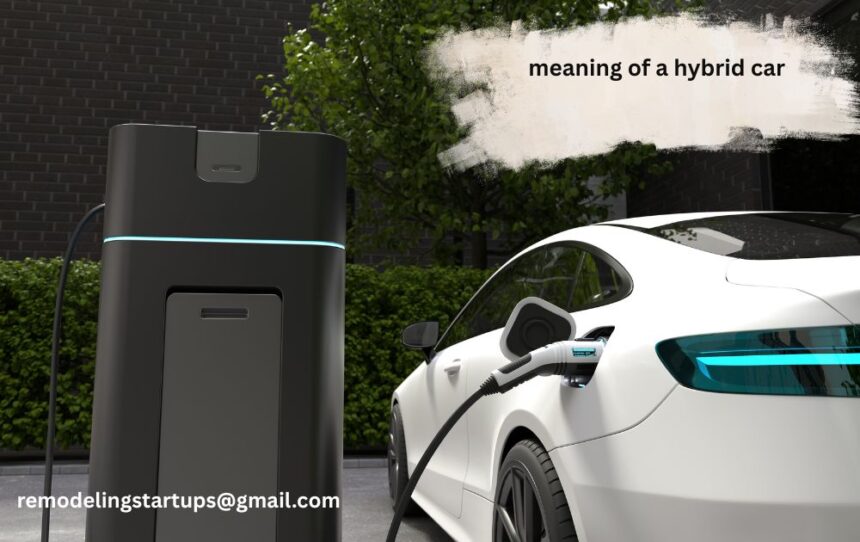
If a regular hybrid is a part-time helper, a plug-in hybrid is closer to an electric car wearing a backup plan. These are regular hybrids with seriously enlarged batteries, built for full-speed operation on electricity alone for anywhere from 20 to 50 miles.
They share some of the same charging headaches as an EV battery, but they’re milder, since a plug-in’s pack is roughly a quarter the size of a full EV’s. That combination turns the car into a part-time EV with no leash.
It’s ideal as a weekday commuter while still keeping full gasoline capability ready for long trips. Drivers also keep the efficient habits of a regular hybrid even once the battery runs dry.
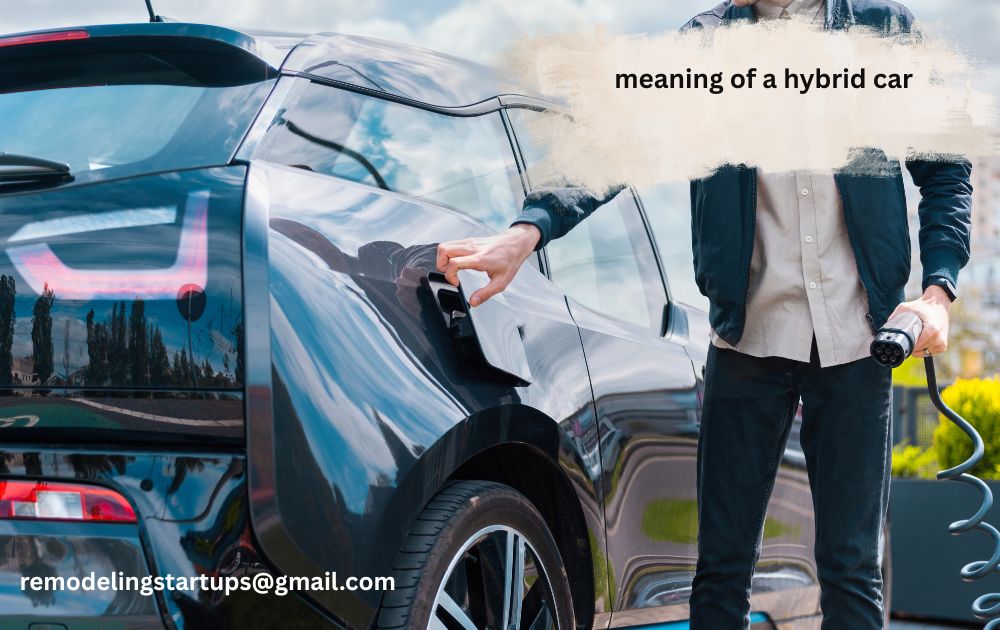
The catch is a higher purchase cost tied to that bigger battery, and sometimes a smaller gas tank as a result. Recharging is simple: connect an external power source, and with a large battery onboard, a full daily commute can run on pure electric power.
The car then quietly slips back into acting like a conventional parallel hybrid. Models like the Niro Plug-In Hybrid and Optima SW Plug-In Hybrid show how accessible this tech has become.
The broader PHEV world, short for plug-in hybrid electric vehicle, pairs an engine with a full battery and motor combo the same way self-charging hybrids do, just with a socket added on top of charging from brakes. These cars typically carry larger battery packs and more powerful motors.
Range stretches to 20-80 miles with top speeds past 70mph. You’ll find this tech in everyday cars like the Volkswagen Golf all the way up to the Porsche Cayenne, and even supercars like the McLaren Artura use plug-in hybrid systems purely to sharpen performance.
Mild Hybrids and the Lighter Side of the Meaning of a Hybrid Car
Mild hybrids are the quiet, unassuming members of the hybrid family, and honestly, calling them hybrids at all is a bit generous. They carry small 48-volt batteries that can’t deliver any meaningful propulsion on their own.
What they can do is soak up regeneration and combine the starter and alternator into a single unit that fires the engine back in gear almost instantly. In practice, the petrol or diesel engine does nearly all the actual work.
The electric motor steps in just enough to trim fuel use or add a touch of boosting performance. Kia’s new Sportage lineup is a solid example, built around a mild hybrid powertrain using a small electric motor and a small battery that can’t manage electricity alone.
That little system helps the car when moving off from a standstill, lets the engine shut down while travelling downhill so the car can coast, and keeps essentials like power steering running. It’s really nothing more than a smarter, sophisticated stop-start system dressed up with a hybrid badge, which is exactly why this part of the meaning of a hybrid car trips people up.
Blurred Lines
Real hybrid systems rarely respect tidy definitions, and that’s actually a good thing. Toyota’s Hybrid Synergy Drive behaves mostly like a parallel system, yet its dual-motor design occasionally slips into brief series power generation.
This happens whenever the engine’s efficient operating speed produces more power than the driver needs in that instant. Honda plays a similar trick from the other direction.
Its primarily series setup can clutch the engine straight to the wheels when the onboard computer decides that’s the more efficient path. Neither case breaks the rules; it just proves that engineers care more about chasing the most efficient solution than sticking to whichever label is easiest to explain.
How Hybrids Benefit You
At its core, every hybrid exists to grab braking energy that would otherwise vanish as heat and wear inside the brakes, then put that recovered energy back to work. Most drivers care about this because it saves fuel and lifts MPG, using the electric motor to delay the gas engine start.
A few sports-minded hybrids flip the script and spend that same harvested energy to boost power and speed instead. For anyone chasing fuel-saving hybrids, the appeal is straightforward: you save money and shrink your carbon footprint at the same time.
MPG and carbon emissions really are two sides of one coin. If you live in an apartment or only plan to own one car, a pure EV can feel impractical, but a gasoline-fueled hybrid carries no leash and skips any special fueling requirements.
On top of that, leaning hard on regenerative braking means your brake pads and rotors enjoy a genuinely longer lifespan. There’s no separate starter motor to wear out, and the small battery barely eats into space or demands exotic battery chemistry.
Meaning of a Hybrid Car: Fuel-Cell Hybrids Explained
Meaning of a hybrid car takes an interesting turn with fuel-cell hybrids, since they belong to the series hybrid family but work in a very different way. They’re built with an electric motor, full regenerative braking, and a small high-voltage battery. But here’s the twist: there’s no gasoline engine anywhere in sight, which already changes the meaning of a hybrid car in this category.
In its place sits a fuel cell, a device that turns hydrogen gas straight into electricity, leaving only water as a byproduct. That means these cars run on electricity all the time and stay just as quiet as any EV on the road, adding another layer to the meaning of a hybrid car as technology evolves.
Refueling feels refreshingly normal too, since hydrogen tanks fill up in about five minutes, much like a regular gas stop. The catch is station availability, which stays limited and largely boxed into California population centers, making this meaning of a hybrid car variant practical for only a small slice of drivers right now.
Self-Charging Hybrid
Self-charging hybrids never get plugged in, full stop. Their batteries top up two ways: the petrol engine acting as an impromptu generator, or power recuperated from braking, where kinetic energy converts into electrical energy.
This works through the same regenerative braking process covered earlier. These cars can run on battery power only for brief stretches, with the engine shut off entirely for genuine zero-emission motoring.
This only works across short distances, often around one mile, and only at low speeds up to roughly 25mph. Toyota and its upscale cousin Lexus remain the names most tied to this technology.
You’ll also spot it in everyday cars like the Renault Clio and Ford Kuga, proving this isn’t some niche luxury feature anymore.
Hybrid cars and their benefits
The case for self-charging hybrid benefits practically writes itself: improved fuel economy especially around town, genuine zero-emission motoring in stop-start traffic, and a ride that tends to feel smooth.
These cars come with proven technology and a strong reliability track record, all without needing a plug-in routine and at a price point cheaper than chasing plug-in hybrid tech.
The plug-in hybrid benefits tell a different story, leaning hard into tax perspective advantages and a meaningful electric range that opens the door to true zero-emission commutes. The driving feel mimics an electric car the moment it’s charged.
These cars can knock out motorways purely on battery power, and the underlying tech flexes easily toward either performance or economy.
Disadvantages of Hybrid Cars
Nothing is perfect, and the self-charging hybrid disadvantages are worth knowing upfront. There’s heavy petrol engine reliance most of the time, weaker standing for company car tax purposes, and a driving feel rarely praised for an engaging driving experience.
Plug-in hybrid disadvantages cut differently. They run expensive next to self-charging hybrids and conventional petrol or diesel cars, and they demand being plugged in regularly to actually pay off.
If you skip that charging routine, overall fuel economy suffers while the car also sits heavier than conventional cars thanks to all that extra hardware.
How to Drive a Hybrid Car
You don’t need special skills to get behind the wheel of a self-charging hybrid, but a little technique goes a long way. Smooth acceleration makes the most of the continuously variable transmission, or CVT gearboxes, that most of these cars use.
Stomping the pedal just sends engine revs soaring under heavy acceleration for no real benefit. Every hybrid runs automatic gearboxes that feel just like conventional autos to operate.
Some add a regenerative braking mode that ramps up slowing the moment the accelerator is released, pushing extra power back to the batteries. Plug-in hybrids typically let you force electric mode on demand if there’s enough charge in the batteries.
There’s also an auto mode that lets the system sort things out on its own. PHEVs often add a save mode too, holding the engine in charge to protect battery reserves for later.
This is useful for keeping them until you leave the motorway and want zero-emission mode back in town. Some of the sharper systems can even recognize geographical waypoints and switch automatically, a trick called geofencing, letting you glide through your own neighbourhood purely on stored battery power.
The Real Meaning of a Hybrid Car for Daily Driving
This is genuinely an “it depends” question, and I say that as someone who’s gone back and forth on it myself. Drivers covering 40,000 miles a year are usually better off with a diesel car, since its economy and long range beat what any hybrid offers.
This is especially true once you’re spending most of your time on the motorway, where a self-charging system’s electric mode barely gets used. A PHEV in this scenario rarely gets enough downtime to recharge for its improved economy to matter.
If you’re a company car driver with access to a plug-in hybrid, the tax advantages tied to low carbon dioxide emissions are genuinely hard to beat. This is especially true when your daily commute can run entirely on battery power.
Spend a lot of time driving around town and a self-charging hybrid rewards you with a smooth, quiet companion. If your driving sits at normal or average mileage, either a PHEV or a self-charging hybrid will serve you well, and that’s really the bottom line behind the meaning of a hybrid car in everyday life.
FAQ:
Is a hybrid car an electric car?
Not quite , a hybrid car blends a gasoline engine with an electric motor, while a true EV runs on electricity alone.
What is an example of a hybrid car?
The Toyota Prius is the most famous example, alongside others like the Honda Civic and Kia Niro.
What are the disadvantages of a hybrid car?
A hybrid car often carries a higher purchase cost, heavier weight, and weaker savings if you rack up highway miles instead of town driving.
What are the advantages of a hybrid car?
A hybrid car offers better fuel economy, lower emissions, longer-lasting brake pads, and real peace of mind at the pump.
How does a hybrid car work with petrol?
It uses a petrol engine for power and backup, while an electric motor and regenerative braking quietly handle the lighter, slower work.