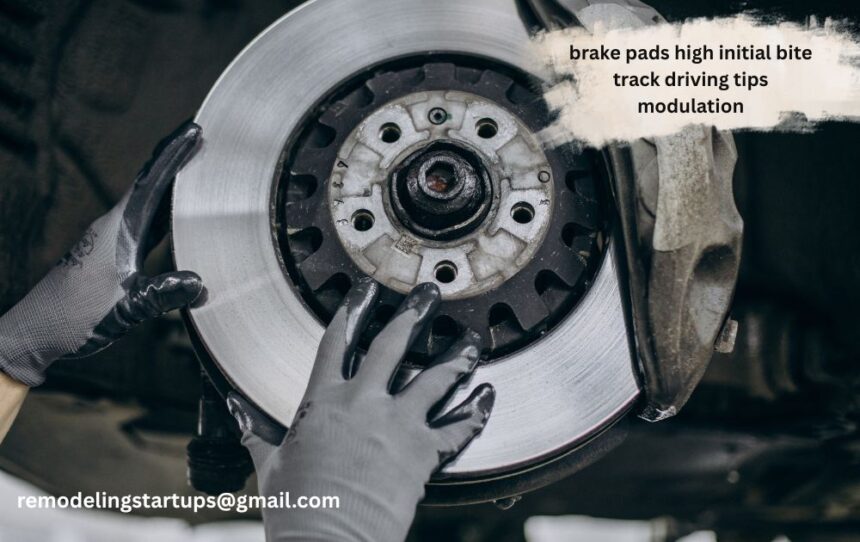
Choosing the right brake pads high initial bite track driving tips modulation setup alters how confident your daily road car, fast road car, or track car feels when brake temperatures spike. Experienced racers know that stopping power means nothing if you cannot control the pedal feel, initial bite, and heat consistency during hard braking.
Our definitive guide explores how fade resistance and high-performance fluid guarantee safety by maintaining maximum friction for short stopping distances without sudden brake fade. This article provides a fresh look at materials from Hawk, Performance Friction, EBC, and Pagid to eliminate low dust or low noise performance street traps, helping you balance cold bite and high-speed heat control across 4 distinct driving tiers on track days.
Bedding in Brake Pads
To bed a new pad to a fresh rotor, you must transfer a uniform layer of material onto the slick iron disc to establish a stable friction interface. This mechanical marriage optimizes overall performance and extends pad life because a pad grabs its own transferred material much better than raw iron.
Drivers must raise the braking system to its optimal operating temperature gradually so the friction layers cure properly all the way through to the core. Rushing this process causes the initial layer to wipe away by the cold under-layer, which ruins effectiveness and induces uneven wear or premature tear, so always follow the exact manufacturer processes.
Different Types of Brake Pads
Every racing discipline and vehicle demands a specific choice of material because no universal compound fits every single track application. While a road driver prioritizes low dust, low noise, and immediate cold bite, a track driver demands extreme heat resistance, repeatability, and absolute fade control.
Organic pads remain strictly comfort-focused, whereas semi-metallic pads deliver an excellent balance of performance and raw value. Meanwhile, premium ceramic style options provide unparalleled consistency and durability during repeated, heavy braking cycles within a high working temperature range.
Track Driving Tips Modulation: Factors to Consider When Choosing Performance Pads
Transitioning from casual road use to aggressive track use requires shifting your focus from low-temperature confidence from cold to absolute consistency when hot. Certain compounds excel in everyday driving but fail completely when overheated on a demanding race car. Implementing the right brake pads high initial bite track driving tips modulation habits ensures that your vehicle stops predictably lap after lap.
To guide your upgrade over OEM components, evaluate your vehicle weight, top speed, and braking system requirements alongside specific friction coefficients and heat tolerance limits. Furthermore, your regional tracks dictate the thermal demand; for instance, CTMP (Mosport) is famously gentle on components, while Calabogie and Mt-Tremblant rapidly destroy setups without a proper brake pads high initial bite track driving tips modulation design strategy.
Take these steps to select the right compound for an occasional track day, Autocross, or a dedicated weekend warrior by analyzing real-world feedback from fellow racers, manufacturer testing, and professional race teams. Finding the sweet spot between aggressive bite and smooth deceleration is the ultimate goal when mastering brake pads high initial bite track driving tips modulation on circuit layouts.
Driving Style
Drivers who enjoy aggressive driving and frequent track days must install high-performance brake pads engineered for superior heat resistance and strong stopping power. Conversely, a standard daily commute requires a pad that prioritizes driving comfort, generates minimal dust, and maintains low noise levels.
If you look at popular tuner platforms like the Honda Civic Type R EP3, you can see how different upgrades directly address specific driver goals and tight budgets. Advanced drivers utilize specific track driving tips modulation to prevent unsettling the chassis balance during corner entry.
Vehicle Type
Every unique chassis has distinct braking needs dictated by its curb weight, kinetic energy, and specific track use. For instance, heavy-duty utility trucks and SUVs require robust materials that can manage heavy loads and provide rapid heat dissipation.
On the opposite end, high-horsepower cars and lightweight performance vehicles need high-torque compounds that can survive extreme driving conditions while maintaining optimal performance.
Budget
When calculating your track operational cost, look past the initial pad price and select a setup that balances performance and long-term affordability. Investing in premium, high-quality brake pads actually saves you money over a long setup lifespan by minimizing frequent component replacements.
A cheap, poorly matched component that overheats quickly and wears prematurely forces you into expensive disc and fluid changes, driving up your expenses in the long run.
Brake Pads High Initial Bite Track Driving Tips Modulation: System Maintenance
To maximize a premium pad compound on the street or track, you must upgrade your entire braking system as a cohesive unit. Swapping your OEM rotors for high-carbon Brake Rotors from brands like DBA Slotted Rotors, Stoptech Slotted Rotors, or Girodisc Rotors increases overall thermal capacity and mechanical durability.
Next, you must upgrade to a high-performance Brake Fluid; a racing brake fluid prevents a spongy brake pedal by enduring the high temperatures generated on track. Regular bleeding and a 1-year flush routine maintain peak performance and prevent dangerous fluid boiling during long downhill descents.
Finally, install a set of stainless steel braided Brake Lines to restore crisp pedal feel, and fill the system with high-quality alternatives like Motul RBF 660 Factory Line (500ml), PBS Prorace DOT4 (660 Max), or Motul DOT 3 and 4 (5L).
Be ready to compromise
We handle constant inquiries from customers who expect track-day durability alongside silent, quiet operation, minimal dust, and excellent longevity. Unfortunately, current materials technology cannot satisfy all these conflicting criteria simultaneously, meaning high-performance racing brake pads always require real compromises.
Extreme race pads ignore street-friendly conditions completely, so expect aggressive dust and heavy rotor scraping if you operate them outside their intended environment. Understanding brake pads high initial bite track driving tips modulation helps drivers manage these aggressive friction characteristics on circuit routes.
1. Street Performance & Autocross (Autoslalom) brake pads
For a reliable street upgrade, Hawk Performance HPS 5.0 pads deliver increased stopping power over OEM units with exceptionally quiet operation and very low dust. If you require sharper response for autocross competition or entry-level track day events, the Hawk Performance HP Plus compound provides a massive jump in torque.
This aggressive pad operates optimally within a 200F to 600F window and can handle a peak 800F maximum. The primary trade-off includes louder brake noise, higher brake dust production, and accelerated rotor wear if driven in near-freezing temperatures, so we recommend swapping them out during the winter months.
2. Brake Pads High Initial Bite Track Driving Tips Modulation: Advanced Racing Compounds
Many drivers invest thousands in a big brake kit before discovering how a simple compound change optimized for their exact operating temperature range fixes their issues. Running a pad below its window causes terrible rotor wear, while exceeding its limit triggers rapid pad wear and sudden, dangerous brake fade. Choosing the right brake pads high initial bite track driving tips modulation setup alters how confident your vehicle feels when temperatures spike.
Lightweight track cars like Miatas and Civics running street tires favor the Hawk DTC-30 because its smooth initial bite and predictable modulation outperform the peaky HP Plus across a 100F to 800F window (with a 1200F maximum). For classic open-wheel setups like F1600 or split-compound rear layouts on FWD cars, the “old-school” Hawk Blue 9012 provides predictable torque and a smooth release from 200F to 800F (with a 1000F max) to help drivers master brake pads high initial bite track driving tips modulation techniques.
Endurance racing teams and time trial drivers utilize the Hawk ER-1 Endurance compound for its stellar thermal stability between 500F and 1100F (with a 1600F peak). Our absolute best-selling track option is the high-torque Hawk DTC-60, which handles sustained track abuse on heavy, high-power platforms like BMWs, the Mitsubishi Evo, Subaru STIs, Civic Type R, Focus ST, and VW GTi. This compound is ideal when implementing advanced brake pads high initial bite track driving tips modulation habits during aggressive corner entry.
For extreme environments, heavy GT platforms running sticky tires, such as the Camaro ZL1, SS 1LE, Corvettes, Mustang GT, GT350, GT500, Vipers, AMG GT, or late-model M cars like the Porsche 911 GT3 and RS—rely on the Hawk DTC-70 (600F to 1200F).
Finally, the ultra-aggressive Hawk DTC-80 handles extreme 600F to 1500F windows (with a 1700F max), delivering unyielding friction stability for heavy prototype race cars running slick aero setups and racing slicks so racers can execute precision brake pads high initial bite track driving tips modulation under heavy deceleration.
Performance Friction Brake Pads
Motorsport enthusiasts driving high-performance Porsche and BMW chassis track platforms highly favor premium PFC racing and track pads. The legendary PFC 08 serves as an exceptional endurance racing option, working beautifully between 300F and 1300F (with a 1500F maximum) to deliver smooth initial bite, flat torque, and consistent modulation.
If you need a sharper tool for shorter distances, the PFC 11 sprint compound delivers immense, rising friction from 400F to 1400F while remaining remarkably rotor friendly. For the absolute newest generation of sports cars, the state-of-the-art PFC 331 front and 332 rear axle split setups utilize degressive friction curves to remain fully ABS friendly without sacrificing total pad wear life or high-temperature durability. Utilizing brake pads high initial bite track driving tips modulation ensures you extract the full performance potential from these high-end options.
TRACK SEASON IS COMING
The long-awaited track season is finally arriving across the country. To help drivers make the most of it, industry experts like Mitch Bloom, Sales Manager at Hawk Performance, have published highly detailed tech articles sharing specialized engineering insight.
Since 1993, these experts have guided newcomers and veterans through complex technical topics like proper motorsport brake pad bedding on a traditional road course to fast-track a process that normally takes 10 years of trial and error to perfect.
DOES BEDDING CHANGE WITH DIFFERENT PADS?
The complex world of performance braking offers completely different material behaviors depending on your chosen compound. An ultra-high-friction DTC60 setup possesses an incredibly broad temperature range that allows it to transfer a clean layer onto the rotor in just 3 or 4 laps.
Conversely, a high-durability endurance compound like the ER-1 features a lower baseline friction coefficient and requires significantly more patience to cure according to manufacturer guidelines.
THE BEDDING PROCESS: STEP-BY-STEP
Your initial shakedown run on Lap 1 introduces progressive heat into your tires and brake system. Treat your brakes like a premium steak: cook them using slow, gradual warmth by practicing gentle pedal actuation and consistent pressure until the pads begin to grab as you build speed down the straights.
For Lap 2, pick up the pace to a standard out lap tempo to heat the pad surface and core thoroughly, targeting earlier application in normal braking zones at roughly 80-90% of your ultimate straightaway velocity. Lap 3 serves as your definitive bedding lap; drive at a 90% pace, but deliberately crush the pad against the rotor right up to the ragged edge of ABS lockup to transfer a flawless friction layer.
Finish the sequence on Lap 4 by executing dedicated cool-down laps, turning corners carefully while maintaining a steady 50-70 mph cruise to bring down system temperatures safely.
INTO THE PITS
After completing your track cool-down sequence, guide your car directly into the pit area and park on a level surface. Shut down the engine in first gear, leave the e-brake completely disengaged, and secure the wheels using a solid wheel chalk or a simple 2×4 timber segment.
You will feel immense heat radiating away from the wheel arches, which is completely normal for a curing friction layer. Every 5-10 minutes, gently roll the chassis backward or forward a few inches to ensure the hot pad does not rest on the exact same spot of the cooling rotor while the surface cures.
SOME HELPFUL NOTES
When pushing your car on track, modulate the pedal carefully to maintain absolute control and avoid triggering the ABS limit. Treat every single pedal engagement as a smooth, highly fluid movement rather than an abrupt stomp.
Land your foot onto the brake pedal gently like a butterfly, and then progress your foot pressure firmer and firmer through the stroke. Take your time during your cool-down laps because you cannot get the internal core heat down too low once the primary bedding phase concludes. Applying these track driving tips modulation habits will instantly lower your lap times.
Organic Brake Pads
Standard organic materials form the base of traditional non-metallic brake pads, which combine a specialized rubber, glass, and resin blend. These affordable options are highly popular for everyday driving under moderate conditions because they remain exceptionally gentle on cast-iron discs.
They provide a quiet, incredibly smooth braking experience, though they suffer from accelerated wear, create significant dust, and lack the high-tier performance required for spirited driving.
Semi-Metallic Brake Pads
High-performance semi-metallic brake pads are constructed by blending durable metal fibres like steel or copper with stable organic elements. These metallic strands allow the pad to dissipate harsh heat much faster, making the compound highly resistant to severe brake fade.
They deliver outstanding stopping power for heavy-duty use, though they create higher noise levels and accelerate your base brake disc wear.
Ceramic Brake Pads
Premium performance options utilize a sophisticated blend of aerospace-grade ceramic fibres and stable non-ferrous materials to build advanced ceramic brake pads. These compounds have earned massive global popularity due to their exceptional all-weather performance and long-term durability.
They deliver rock-solid, predictable stopping power across a wide spectrum of operating temperatures, though they remain significantly more expensive than alternative styles.
Climate and Driving Conditions
Operating a high-performance vehicle in regions with harsh weather, heavy rain, or deep snow requires specialized brake pads optimized for wet and icy conditions. Carefully evaluating your regional climate and typical vehicle use helps narrow down the perfect aftermarket choice.
Matching the underlying pad materials to your exact environment guarantees superior thermal performance and excellent wear advantages.
Understanding Brake Pad Ratings and Certifications
To choose the perfect track-day tool, you must understand standard performance brake pads ratings and safety certifications. High-quality components meet or exceed strict industry standards like the global ISO 9001 benchmark, which guarantees that the friction materials have undergone rigorous testing to satisfy mandatory quality standards and protect driver safety.
Pay close attention to the Friction Coefficient, which determines how efficiently a pad transforms kinetic energy into thermal heat to bring the car to a halt. While a high coefficient delivers immense stopping power, professional drivers seek a balanced, progressive feel and a predictable initial bite over raw maximum friction numbers.
True confidence relies entirely on structural pedal feel, precise modulation, and total heat stability under pressure. Review the manufacturer Temperature Ratings to understand how a pad acts within its target thermal window to avoid dangerous hard stops fading.
Keep your fluid temperature in mind as well; reading an expert braking consistency guide shows how boiling fluid ruins a pedal during intense track use. Finally, check the Noise Ratings before purchasing your new setup, as track-focused pads can be incredibly loud compared to a refined, quiet driving experience. Experienced drivers master brake pads high initial bite track driving tips modulation to safely control high deceleration rates without lockup.
Conclusion
Selecting the right racing brake pads completely dictates your car’s performance and safety limits on the track. By carefully analyzing the structural materials, thermal performance characteristics, and mechanical compromises of each compound, you can select a system that optimizes track safety. Investing in a properly matched system elevates your braking efficiency and gives you a definitive competitive edge on circuit paths while applying brake pads high initial bite track driving tips modulation.
FAQs
Where can I find a forum discussing brake pads with high initial bite and track driving modulation tips?
Popular automotive and track day forums feature dedicated community threads where drivers share real-world experiences regarding pedal feel and braking techniques.
Which are the best brake pads for achieving a high initial bite on the track?
Aggressive semi-metallic compounds from brands like Hawk, Performance Friction, or Pagid deliver the strong stopping power and friction stability required for circuit driving.
Are ceramic brake pads suitable for high initial bite track driving and modulation?
Standard ceramic options are engineered for low dust street driving and generally lack the necessary heat resistance and aggressive bite needed for serious track use.
How do I choose which Hawk brake pads to buy for my car?
You should match the specific pad compound to your vehicle weight, tires, and the actual operating temperature range your brakes will experience on circuit.
What are the main benefits of the Hawk DTC-30 compound?
This specific compound offers an entry-level track solution with a smoother initial bite and predictable modulation that works exceptionally well on lightweight sports cars.