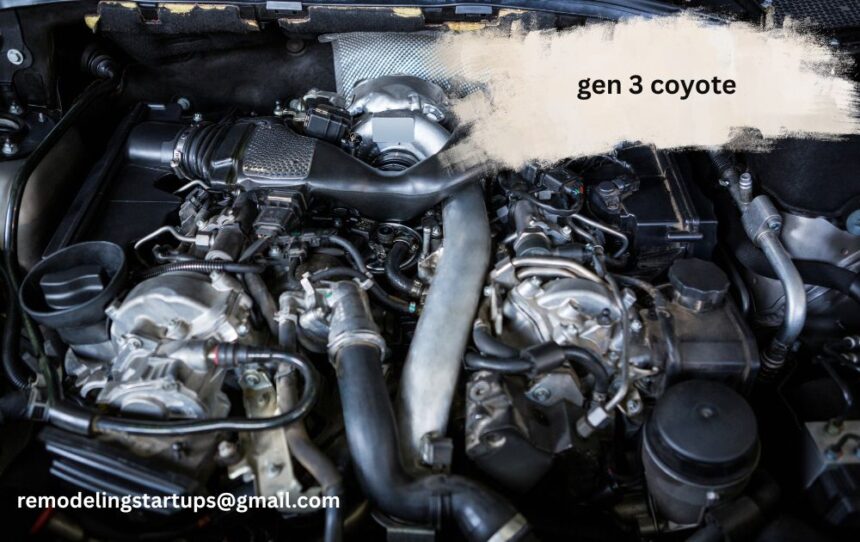
Gen 3 Coyote is the engine every Mustang fan eventually asks about, and the story starts back in 2011 when Ford’s 5.0-liter Coyote V-8 launched with 412 horsepower and a real chip on its shoulder. Nobody expected that engine to grow into the naturally aspirated legend it became, now pushing past 500 horsepower. That moment in 2011 marked a genuine turning point for Ford’s place in the performance world, landing under the hoods of Mustang GTs and F-150 pickups alike. Looking at American muscle since then, nothing has really been the same.
Coyote turned into a constantly evolving platform, growing from that 412-horsepower start into a naturally aspirated beast across 13 model years and four full generations, plus plenty of variants along the way. The engine built a loyal aftermarket fanbase that proved its success went far beyond what Ford engineers in Dearborn ever expected. This guide focuses on where the engine came from and what changed generation by generation, with real attention on the gen 3 coyote specifically.
Gen 3 Coyote First Look
The first real look most enthusiasts got inside the gen 3 coyote 5.0-liter engine revealed serious upgrades: 93mm cylinder bores, larger valves, improved cylinder heads, a new intake manifold, upgraded bearings, and a viscous crank damper. Even the composite oil pan changed, ending up 2 kilograms lighter than before. This third-generation engine powering the 2018 Mustang GT produces 460 horsepower, enough to hit 60 mph in under 4 seconds with the new 10-speed automatic.
Gen 3 Coyote Engine Specs (2018-2023)
Pop the hood on a genuine gen 3 coyote and the numbers tell their own story. Compression ratio sits at 12.0:1, horsepower rating lands at 460 hp, and torque rating comes in at 420 ft-lbs across the 2018-2023 Mustang GT range. Displacement runs at 5.0L, built from aluminum using Plasma Transfer Wire Arc technology for the cylinder bores. The whole engine carries Twin Independent Variable Cam Timing, known as Ti-VCT, plus port and direct injection working together, called PFDI.
Gen 3 Coyote Engine Overview / Big Changes
Anyone with a long history following this engine knows the real story from its creators: the original 5.0-liter was basically considered maxed out at birth. That turned out to be a conservative outlook, because Ford’s engineers kept finding ways to outdo themselves. From building the RoadRunner for the Boss 302 to carrying those lessons into the Gen 2 Coyote for the 2015 Mustang, the engine program kept moving forward year after year.
For a while, the dual-fuel system powering the 2018 Mustang GT stayed a mystery to outsiders. Eventually the real upgrades came to light: a boost of 25 horsepower and 20 lb-ft of torque, achieved through high-pressure direct injection layered onto the existing port fuel injection system. This combination gave drivers robust low-end torque, strong high-rpm power, and genuinely improved fuel efficiency all at once. Honestly, this dual-fuel setup makes it the most legit 5.0-liter engine Ford has built.
That extra performance comes from the same Plasma Transfer Wire Arc cylinder liners used in the GT350’s 5.2-liter engine, resulting in bores measuring 93mm in diameter. Larger bores made room for larger valves, with both intake and exhaust valves growing larger in diameter, fitted inside all-new cylinder heads that flow noticeably better than before. New camshafts paired with those heads too, though the physical cams differ from earlier generations, so swapping parts between generations isn’t really an option.
A new crankshaft and rod bearings, paired with a viscous crank damper, let this engine rev 500 rpm higher than Gen 2, reaching 7,500 rpm. That rev ceiling demanded a rev-friendly intake, so engineers built a new manifold with specific runner tuning to increase peak power speed. The throttle body stayed at 80mm in diameter but switched to a modern sensor protocol offering higher resolution data to the powertrain control module.
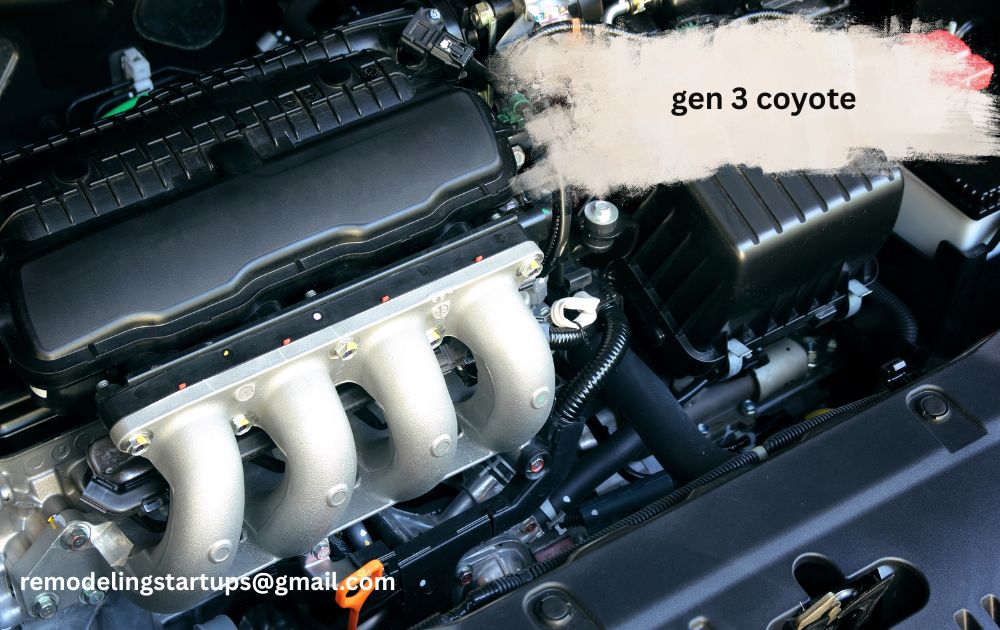
Gen 3 Precision Power / PCM and Performance Results
The 2018 Mustang also picked up an all-new PCM with enough processing muscle to manage the complex mix of direct and port injection running through this engine. It reads data from four knock sensors, double the previous count, allowing far more precise spark control for optimized performance. By utilizing direct injection to lower the temperature of the incoming air, engineers can implement more aggressive ignition timing. This approach is precisely what enabled them to raise the compression ratio to 12:1 ,a threshold previously restricted to high-performance race cars fueled by racing gasoline.
Chronological Overview of Ford Coyote V8 Generations (Gen 1–Gen 3)
Looking at raw numbers across generations really shows the jump. Bore moved from 92.2mm in Gen 1 and Gen 2 up to 93mm for Gen 3, while compression climbed from 11:1 to 12:1. Displacement grew from 4.951 liters to 5.035 liters, horsepower rose from 412 to 435 and finally 460, and torque climbed from 390 lb-ft to 420 lb-ft by the time the gen 3 coyote arrived.
Coyote 5.0’s Origin
To understand the Coyote, you have to know what it replaced. The 4.6-liter modular V-8 served the Mustang GT loyally for years, but by 2009 Chevrolet had relaunched the Camaro with 426 horsepower and Dodge was charging back with its Hemi lineup. Ford’s 4.6 was genuinely outgunned. Development on the new engine started around 2007, aiming for substantially more power while sharing similar dimensions with the existing 4.6.
GEN 1 (2011-2014)
The original Coyote arrived in 2011 with 412 horsepower and 390 lb-ft of torque, nearly 100 horses more than its predecessor and an instant new benchmark for naturally aspirated Ford V-8s. The Gen 1 engine ran double-overhead-cam, 32-valve architecture with 11.0:1 compression. Ford also dropped a detuned version into the F-150, and one of the most significant variants, the Boss 302 RoadRunner, arrived in 2012 making 444 horsepower at 7,400 rpm.
GEN 2 (2015-2017)
Mustang chassis S550 arrived in 2015 with an updated Gen 2 Coyote that breathed better at high rpm, picking up larger valves, revised camshafts, and stiffer valve springs. Gen 2 made 435 horsepower and 400lb-ft of torque in the Mustang GT. The related 5.2-literVoodoo engine, built for the Shelby GT350, used a unique flat-plane crankshaft and made 526 horsepower at an 8,250-rpm redline, becoming the most powerful naturally aspirated production engine Ford had at the time.
Gen 3 Mach 1 and 5.2-liter Predator
The 2021-2022 Mach 1 earned its title as the gen 3 coyote’s hero pony, borrowing the GT350’s intake manifold and throttle body to land at 480 horsepower. Ford’s 5.2-liter Predator, the supercharged spinoff built for the 2020 Shelby GT500, used a sturdier cross-plane crankshaft to handle a 2.65-liter supercharger, producing 760 horsepower and 625 lb-ft of torque, another record setter for Ford production engines.
GEN 4 (2024-PRESENT)
The Gen 4 Coyote debuted in 2024 in the seventh-generation S650 Mustang GT, distinguished by a dual-throttle-body induction system and new four-into-one exhaust manifolds. Gen 4 keeps the same bore size and PTWA coating from Gen 3, rating at 480 horsepower, climbing to 486 with the optional active-valve exhaust. Dark Horse, the highest-achieving version, makes 500 horsepower thanks to revised ECM calibration and forged connecting rods borrowed from the Predator.
Same but Different
All four Coyote generations share the same basic bore spacing, deck height, and rod length, meaning plenty of hardware stays interchangeable across the years. The real divide between Gen 3, Gen 4, and the earlier generations comes down to cylinder wall serviceability, since the PTWA bore coating can’t be traditionally bored for oversized pistons. Builders chasing serious displacement gains tend to favor older blocks with iron sleeves instead.
Conclusion
At a moment when the automotive industry’s direction feels genuinely uncertain, with EVs firmly in the conversation, Ford’s continued investment in this platform sends a clear message: the engine has a future. A Gen 5 ‘Yote remains unconfirmed but widely speculated, with rumors of a larger variant built for racing suggesting the bore and stroke math keeps evolving. Ford’s answer today sits at a 500-horsepower naturally aspirated 5.0-liter in Dark Horse form, proving the gen 3 coyote platform that started this whole chapter is good for nearly doubling its original output.
FAQs
Where can I find a Gen 3 Coyote for sale UK?
You can source this powerful crate engine through specialized British performance importers and custom build shops.
What are the most common Gen 3 Coyote problems?
Owners occasionally face minor oil consumption issues or ticking sounds that can cause temporary worry about their investment.
What are the official Gen 3 Coyote specs and horsepower?
This impressive V8 platform delivers a thrilling 460 horsepower directly from the factory for pure driving excitement.
How is the overall Gen 3 Coyote reliability?
It stands as a highly dependable and robust engine built to offer long-term peace of mind on every journey.
What is the average Gen 3 Coyote price?
A complete factory unit typically requires a significant financial commitment but delivers unmatched performance value in return.