How to become a race car driver is the question every motorsport fanatic asks at some point, usually while picturing themselves behind the wheel of a Formula One car, chasing raw speed and the roar of a crowd. That image feels electric, but the path from passion to professional is not a straight road.
It twists, climbs, and demands everything you have got. The NMA receives floods of messages every single day from young hopefuls, beginners, and parents who want to know where to start.
The honest answer always circles back to three things: talent, dedication, and money. No shortcuts exist here, only bold moves and bigger goals.
What most people miss is that becoming a race car driver is not just about being fast. It is a full career choice that pulls you into one of the most competitive industries on earth.
Think about it this way. David Perel, a Ferrari factory driver and three-time Blancpain GT class champion, spent years grinding through GT3 and GTE championships before anyone knew his name. He started his karting career in his late teens and early twenties, paused for six years, and came back at 29 years old with a fire that never went out.
He cold-emailed a Semi-Pro driver named David Heinemeier Hansson during Le Mans weekend in 2014, and that one message changed everything. That is the motorsport journey in a nutshell.
The F4 Training Camp describes the modern racing driver as someone who must master the car, the circuit, the cockpit, and their own mind, all at once. Workshops built around speed, skills, and race knowledge exist because raw talent alone will never be enough.
Whether you dream of the FIA grid, Gran Turismo championships, or Assetto Corsa Competizione sim competitions backed by Thrustmaster, your journey starts the same way, with a decision to go all in, right now, no excuses.
Talent Helps, But Money Matters on the Road to Become a Race Car Driver
Ask any motorsport veteran and they will tell you the same thing, being the fastest driver in your region means nothing without financial support when you want to know how to become a race car driver. The reality of how to become a race car driver demands more than raw speed and talent.
The NMA hears from kids and parents constantly, and the hardest conversation is always about money. Talent opens the door, but money keeps it open, and this is the brutal truth about how to become a race car driver. Understanding how to become a race car driver requires accepting that financial backing determines your trajectory more than pure ability.
Lewis Hamilton’s dad worked multiple jobs just to keep young Lewis on the karting track, proving that the path to how to become a race car driver starts with family sacrifice. That same Lewis Hamilton became a 12-year-old karting champion in 1997, photographed by Richard Saker for The Observer, before the world even knew his name or understood the cost of how to become a race car driver.
The stories that follow are not fairy tales, they are reality checks about the true cost of how to become a race car driver. Casey Stoner’s parents sold their home and relocated across the world so he could race. Esteban Ocon’s family lived in a caravan after selling their house, showing what it really takes to pursue how to become a race car driver.
Michael Schumacher’s parents worked at the kart track to fund his early racing. These are inspiring examples, but they also show how brutally expensive those early years really are when trying to figure out how to become a race car driver.
Here is the truth nobody wants to say out loud: talent in Pro motorsport is table stakes. It is the minimum requirement, not the defining factor when pursuing how to become a race car driver. The financial component overshadows pure ability.
Max Verstappen, Senna, Mansell, every single one still had to fund their junior careers from scratch when learning how to become a race car driver. You will spend 2-5 years after karting trying to prove yourself in the dog-eat-dog world of big circuit professional racing. This period defines your entire journey of how to become a race car driver.
Team owners do not hand out seats based on heart, they run a business and expect drivers to bring sponsorship or family wealth. The climb is difficult, the competition fierce, and only the most relentless make it through. This is the unspoken barrier to how to become a race car driver that separates dreamers from actual competitors.
Grassroots Cost Breakdown for Anyone Looking to Become a Race Car Driver
Let us talk real numbers. A basic kart setup for a cadet level starts around £3,600 for a chassis and engine combo, while junior and senior models push closer to £6,000.
Track fees and race entries run between £40 to £60 for practice days and £100 to £200 for full race weekends. Add tyres at £120 to £180 per set, then layer in fuel and maintenance, and a single season on a second-hand kart costs £6,000 to £7,000 easily, sourced from Reddit and confirmed by X-Kart.co.uk.
Step into a UK club championship and that number jumps to £8,000 to £15,000 per year. Push into national or international competition and you are looking at £50,000 and beyond, with high-level karting going well into six figures, as reported by The Sun.
Climbing the single-seater ladder is where real financial pressure hits. Formula 4 demands up to £200,000 per season, Formula 3 runs £500,000 to £750,000, and Formula 2 can swallow £1.5 to £2 million in a single year.
These are ballpark figures that vary by series and region, not scare tactics. On the GT side, a GT4 Championship season starts at €150,000, a GT3 seat costs €300,000 or more, Le Mans runs €500,000, and a full WEC campaign tops €1,000,000.
Factor in LMP2 at a 20% premium and single seaters at double those numbers, and the picture becomes very clear. Without family wealth, strong commercial backing, sponsorship, or consistent results, staying on the grid becomes nearly impossible.
Speed, reputation, and politics all influence pricing, but the funding must always come first.
Where the Money Comes From When You Want to Become a Race Car Driver
Financial backing in motorsport comes from two main pipelines, wealthy family support or serious sponsorship deals. Lando Norris had Adam Norris, one of the UK’s richest businessmen, backing his rise.
Lance Stroll’s father is a billionaire and part-owner of the Aston Martin Aramco F1 Team. Jamie Chadwick comes from a strong business background. None of this erases their talent or work ethic, but money pushes open doors that talent alone cannot.
For the self-funded driver, the path is harder but not impossible. Sébastien Loeb, a 9-time WRC Champion, worked as an electrician to support his early rally career, a fact that should humble and motivate every aspiring racer.
David Perel stopped karting at 23, built a business with his brother Marc, saved €150,000, and cold-called racing teams until someone answered. He studied Gary Vaynerchuk, read books on marketing and business, and used social media alongside his personal income to cover the rest.
Building your brand is now non-negotiable. You need a recognisable name, an engaged audience, and consistent content, race results, behind-the-scenes videos, and progress updates across YouTube, Instagram, and every platform where your community lives.
Look at Bianca Bustamante: by September 2025 she had 1.8 million Instagram followers and 1.5 million TikTok followers, which led to her signing with McLaren. Brands saw reach, professionalism, and purpose all in one package.
Build a clear business plan, perfect your pitch, network constantly, and never stop. The difference between “no thanks” and “let’s talk” is almost always persistence.
Unbelievable Dedication Is What Separates Drivers Who Become Race Car Drivers
Dedication is the number 1 requirement for any aspiring professional sportsman, full stop. It is not just about waking up early to exercise or choosing what you eat. Real dedication means sacrificing luxuries, cutting materialistic items from your life, and watching people question your life choices every day.
It means raising a ton of money while simultaneously working on becoming a fast racing driver, two massive challenges at once, with no guarantee either pays off.
David Perel used to ask young kids chasing his footsteps three straight questions. Are you willing to sell your Playstation? Are you willing to sell your car, couch, TV, watch, and shoes? Are you willing to break up with your girlfriend or boyfriend to chase this goal?
If the answer to any of those is no, someone who said yes is already ahead of you, fighting for your seat. Every true Pro has gone beyond what felt painful at the time.
The people who motivate themselves every day, who get out of bed with purpose, and push through friends and family raising doubts, those are the ones who survive the grind. Dedication is not a feeling you have on good days.
It is a system you build so that on the hardest days, when money is gone and goals feel unreachable, you still show up. Every element of this journey, the challenges, the sacrifices, the lonely mornings, exists to filter out everyone who does not want it badly enough.
Karting and Raw Talent Behind the Wheel to Become a Race Car Driver
Raw ability behind the wheel is not the same as driving your road car fast, a billion people can do that. What separates a real racing driver is the capacity to be precise under pressure, never missing apexes, hitting the same lap times repeatedly, and absorbing the disappointments of being beaten without falling apart.
Understanding how to become a race car driver means mastering this mental and physical balance that separates champions from the rest.That combination of control is what the racing world calls talent, and karting is where you find out if you actually have it. Learning how to become a race car driver starts the moment you climb into a kart and feel the track beneath you for the first time.
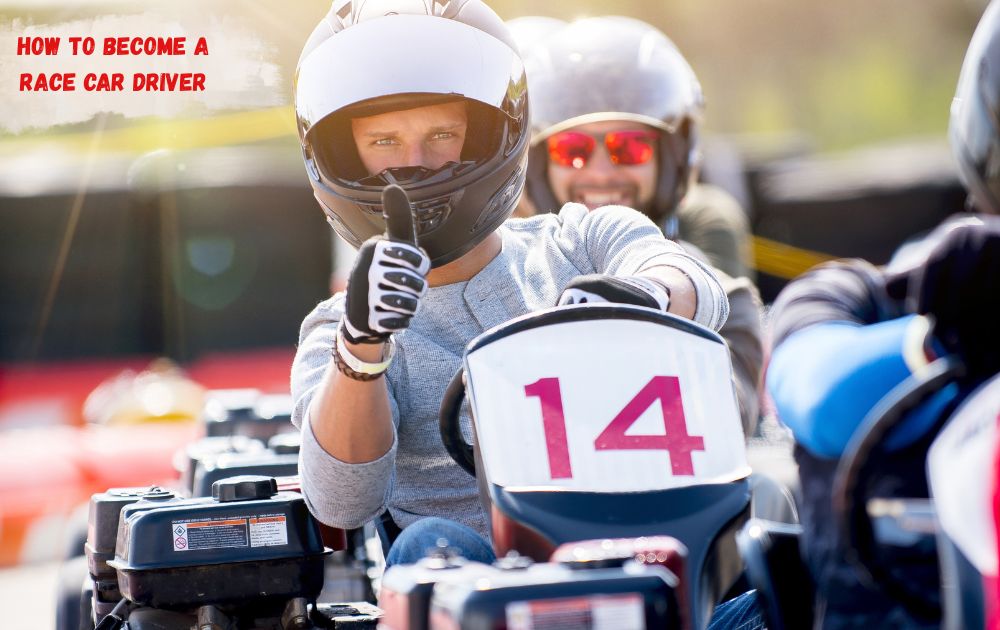
Most Pros started in karting, and the exceptions are rare outliers. Karting is physical, demanding, and teaches you everything, fitness, reading a kart track, working with karting teams and karting shops, and maintaining a pre-owned kart and engine.
The foundation of how to become a race car driver is built entirely on karting experience and raw speed on small circuits. Search Google for your nearest track, make a call, buy a pre-owned kart, do some practice, then sign up for a season.
Finishing last in your first races is completely normal, you are proving something to yourself that no one else can prove for you. This is the first real step in how to become a race car driver, the willingness to start despite fear and uncertainty.
If karting is not accessible, a tin-top series like Polo, Clio, or Scirocco cup gives you competitive racing experience, though it costs more and delivers less mileage. In South Africa, Race Driver SA is a solid starting point for those asking how to become a race car driver outside traditional karting. Alternative pathways still exist for serious drivers committed to the journey.
For sharpening instincts before touching a real kart, sim racing through Coach Dave Academy offers coaching lessons, detailed car setups, and one-on-one sessions with real race engineers, all built around Assetto Corsa Competizione.
Understanding how to become a race car driver through simulation bridges the gap between theory and track time, accelerating your development. By your 20s, your karting career foundation should already be forming, your reputation established, and your path to how to become a race car driver clearly mapped out. The question of how to become a race car driver demands action now, not someday.
The Harsh Truth Most Aspiring Race Car Drivers Need to Hear
Most people who dream of becoming professional drivers will not make it to the top, and the sooner you accept that, the better your backup plan will be. That is not defeatist, that is smart career strategy.
Motorsport offers dozens of meaningful paths for people who love the sport but may not end up behind the wheel professionally. Volunteer with a local team, help at events, and learn the paddock from the ground up, all while building a network most outsiders never access.
Roles in car prep, data analysis, and logistics are essential to every team on the grid. NMA Graduate Martin Plowman is a perfect example, a pro driver who built Paddock Motorsport alongside his studies to future-proof his career beyond driving.
When the time comes to hang up the helmet, he will still be inside the sport he loves, because he planned ahead. Motorsport engineering and motorsport business programs available online make this more accessible than ever.
You do not need to choose between driving and building a long-term career. Whether you stand on the podium or run operations from the pitlane, the action never stops for those who stay connected.
The industry is bigger than the 20 drivers on the Formula One grid, and there is room for serious, skilled people who are genuinely in love with everything motorsport represents.
What Next for Anyone Serious About How to Become a Race Car Driver
If you are serious about a career in motorsport, whether driving is the destination or not, the time to start building your skills is right now. The path of how to become a race car driver demands education, preparation, and an unbreakable commitment to excellence. Learning how to become a race car driver requires dedication and strategic planning from day one.
The National Motorsport Academy offers fully flexible, part-time degrees in motorsport engineering and motorsport business that you can study from anywhere in the world, removing the barrier of location from your journey to become a race car driver. Understanding how to become a race car driver starts with choosing the right educational foundation.
You do not need to be in a classroom or near a circuit to learn how to become a race car driver. You just need to be committed to growing inside this industry and understanding every element that separates amateur racers from professionals. Education is your foundation, whether you pursue formal qualifications or self-directed learning through racing schools, mentorship, and hands-on experience at the track.
How to become a race car driver is a question with many answers, and the smartest one starts with education combined with relentless preparation. Build your racing knowledge through simulators, study technical regulations, learn vehicle dynamics, and absorb everything about circuit strategy.
Preparation separates the drivers who make it from those who fall away, because talent alone will never carry you through the competitive ladder of motorsport.Your preparation must include sponsorship strategy, brand building, financial planning, and networking inside the paddock. Every aspiring race car driver needs a clear business plan alongside a clear racing plan.
This dual approach is how to become a race car driver without family wealth, by turning your reputation and online presence into the financial backing needed for seat fees and team entries.
The unbreakable will to stay in the sport no matter what role you end up playing is what separates true professionals from dreamers. Whether you drive, manage teams, engineer vehicles, or build business operations in motorsport, your commitment to the industry determines your long-term success.
This is the core principle behind how to become a race car driver, how to build a racing career, and how to create lasting impact inside motorsport no matter what path you ultimately walk. The journey of how to become a race car driver never truly ends, it only evolves.
Track Knowledge, Fitness, Mental Strength and Teamwork Every Race Car Driver Needs
A racing driver is not someone who just grips a wheel and pushes pedals, they are an athlete, a strategist, and a communicator rolled into one. The car becomes an extension of their body, and the track their closest ally. Understanding how to become a race car driver means developing this multifaceted skill set that goes far beyond pure driving ability.
Mastery of both separates good drivers from great ones. Professional drivers use advanced simulators to memorize every curve, braking point, and key element of a circuit before setting foot on it. Learning how to become a race car driver requires this dedication to preparation and technical study before you ever touch a real track.
The trackwalk absorbs every detail, reading track conditions, studying layout, and identifying assets most competitors overlook. From technical regulations to aerodynamic concepts, weight distribution to engine dynamics, the vehicle holds no secrets for its driver.
This technical mastery is what separates amateurs from those who truly understand how to become a race car driver at a professional level.Racing is a real sport, an intense one. Fitness and physical strength are non-negotiable when pursuing how to become a race car driver.
Through braking zones and high-speed turns, drivers absorb forces of up to 5Gs, feeling five times their body weight pressing into the side of the car.To handle that, they train neck muscles and core muscles relentlessly, building strength and endurance for long races under extreme conditions. Cabin temperature regularly exceeds 50°C, yet
Formula 1 drivers maintain body fat percentages as low as 8%, because every kilogram affects optimal performance. The athletic demands of how to become a race car driver cannot be overlooked or underestimated.The F4 Training Camp integrates physical coaches, driving coaches, and mental coaches to cover every health and weight variable necessary for success.
Split-second decisions separate victory from defeat, and filtering non-essential information while managing emotions, from excitement and exhilaration to frustration and disappointment, defines longevity. Understanding how to become a race car driver includes mastering mental resilience and emotional control under pressure.
Setbacks on and off the track test composure and resilience constantly. Every professional racing driver has a dedicated team, coaches, mechanics, engineers, and strategists, whose collective effort turns individual performance into shared victory. Teamwork in Formula One is the entire foundation of how to become a race car driver at the highest levels.
Beyond the asphalt, pro-drivers must master interviews, communicate with media, investors, sponsors, and fans, and navigate marketing and communication, because career trajectory is shaped as much off the track as on it.
The F4 Training Camp, with 60 years of experience and 10 comprehensive workshops, prepares you fully for a single-seater career and teaches you exactly how to become a race car driver in the modern era. The path to how to become a race car driver demands excellence in every area of life and racing.
FAQs
Can you become a race car driver at 16 or 17?
Yes, you can start karting and single-seater racing at 16 or 17 to build your foundation and prove your talent early.
What education is needed to become a race car driver?
Formal racing education through karting, Formula schools, and racing academies matters more than traditional academics for your driving career.
How to start racing in your 20s if you’re a beginner?
Jump into karting or club championships immediately, combine sim racing with real-world track time, and build sponsorship while racing aggressively.
Is there an age limit to begin your racing journey?
No strict age limit exists, but starting younger gives you more time to climb the racing ladder, though dedication matters far more than age.
What’s the first step to become a professional race car driver?
Find your nearest karting track, buy or rent a pre-owned kart, sign up for a season, and commit to learning everything about competitive racing.