Learning how to become a f1 driver starts with a journey to the absolute pinnacle of motorsport, which is one of the most exclusive, financially demanding, and physically punishing pursuits in the world. With only twenty seats available on the global grid, the statistical probability of reaching the top tier is exceptionally slim.
For those with the talent, determination, and financial backing, the path requires an exact sequence of development, massive funding, and strict adherence to international regulatory frameworks. This comprehensive analysis breaks down the multi-million dollar trajectory from a child racing a kart to a professional secure in a world championship seat.
The Foundation of a Racing Career and How to Become an F1 Driver
Every successful modern open wheel driver begins their journey in exactly the same environment: a karting track. This is not the recreational karting found at local amusement parks, but highly competitive, micro-engineered racing that serves as the blueprint for handling high-downforce, open-wheel machinery.
Starting Age and Early Development for How to Become an F1 Driver
To establish a realistic trajectory toward a professional single-seater career and master how to become an f1 driver, an individual must ideally begin racing karts between the ages of five and eight.
Understanding how to become an f1 driver at this early stage is crucial for developing instinctual muscle memory, peripheral awareness, and an intrinsic understanding of racing lines and braking zones.
When learning the fundamentals of how to become an f1 driver, young racers learn how to manipulate weight transfer, manage tyre degradation, and execute overtaking maneuvers at high speeds.
This intense grassroots foundation serves as the first major step in the long playbook of how to become an f1 driver. Parents who research how to become an f1 driver know that these early years build the core physical habits required for international grids.
Ultimately, practicing these skills daily shapes the entire blueprint of how to become an f1 driver before transitioning to faster single-seater machinery.
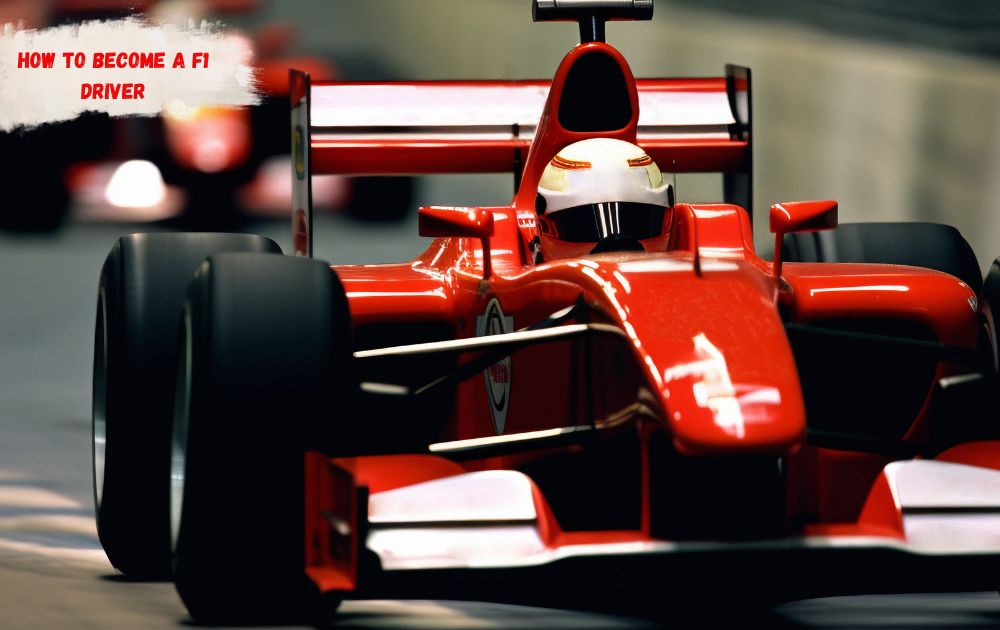
The Karting Ladder to Learn How to Become an F1 Driver
A driver does not simply stay in one karting category when learning how to become a f1 driver. They must progress through a structured hierarchy of speed and complexity as they grow to figure out how to become a f1 driver:
Cadets and Juniors: These initial classes feature smaller chassis and restricted engines, allowing drivers aged eight to twelve to learn the basics of racecraft, data analysis, and the initial rules of how to become a f1 driver.
Senior Karting: Upon reaching thirteen or fourteen, drivers chasing how to become a f1 driver move into high-performance categories such as Rotax Max, X30, or the elite KZ shifter karts. These intense ranks are absolutely vital to understanding how to become a f1 driver, featuring manual gearboxes and speeds exceeding one hundred kilometers per hour.
National and International Championships: To catch the eye of talent scouts while mastering how to become a f1 driver, a driver must transition from local tracks to prestigious series like the British Karting Championship, the WSK series in Europe, or the ultimate FIA Karting World Championship. Competing in these arenas teaches you the true standard of how to become a f1 driver.
Competing at the international karting level requires a massive time commitment, extensive travel, and an early introduction to working alongside mechanical engineers to optimize chassis setup for those discovering how to become a f1 driver. Every single race weekend serves as a test of your knowledge on how to become a f1 driver.
Securing podium finishes in these global divisions highlights your path regarding how to become a f1 driver. If a young athlete lacks the consistency required at this stage, their journey on how to become a f1 driver will likely stall. Ultimately, mastering the art of overtaking in these packed fields provides the definitive blueprint on how to become a f1 driver.
Transitioning to Single Seater Feeder Series and Mastering How to Become an F1 Driver
Once a driver reaches the age of fifteen, they become eligible to transition from karts into single-seater race cars. This step represents a massive leap in weight, aerodynamic characteristics, and mechanical complexity. The path to the top is strictly regulated by the Federation Internationale de l’Automobile through a formalized feeder ladder.
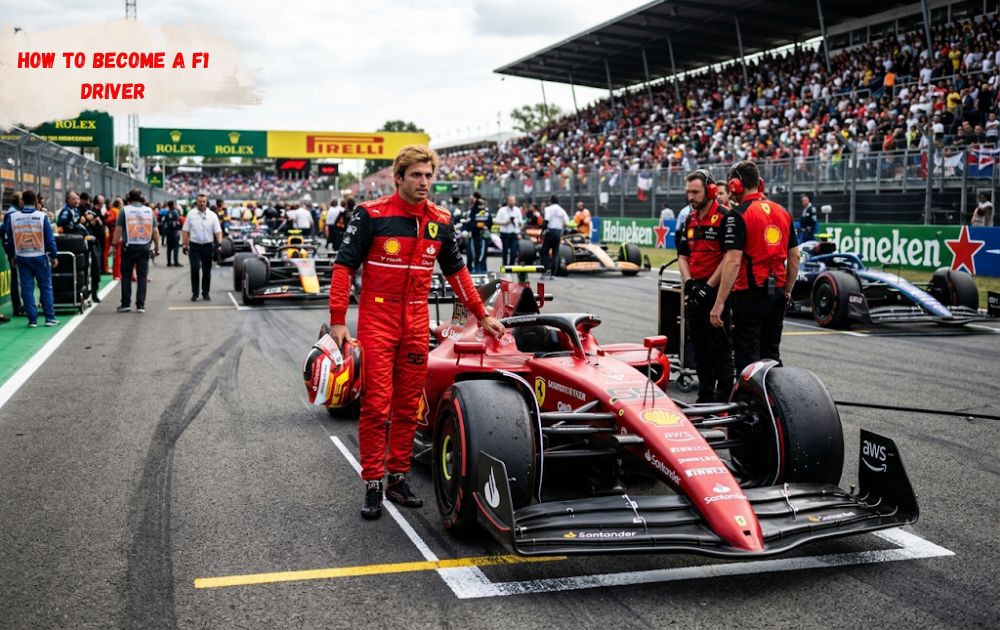
Formula 4
Formula 4 serves as the global entry point for junior single-seater racing. Regulated by regional sporting authorities under the umbrella of international rules, these cars utilize a standardized carbon fiber monocoque safety cell powered by regulated, cost-capped engines producing around one hundred and sixty horsepower.
In this environment, a driver leaves behind the direct steering feel of a kart and learns to manage real aerodynamic downforce, complex suspension adjustments, and standard standing starts on full-sized grand prix circuits. Winning or dominating a prominent regional championship is mandatory to progress upward without stalling out early in one’s career.
Formula Regional
Positioned as a crucial developmental bridge between regional racing and international series, Formula Regional championships provide increased power and significantly advanced aerodynamics. Utilizing three-tier chassis and engines pushing close to two hundred and seventy horsepower, series like the Formula Regional European Championship by Alpine allow junior drivers to adapt to heavier cars with high cornering loads. This stage filters out drivers who lack the physical strength or the technical adaptability required for high-downforce racing.
FIA Formula 3
Representing the true entry into the international spotlight, the FIA Formula 3 Championship runs as a support series alongside official world championship race weekends. Featuring identical machinery powered by naturally aspirated six-cylinder engines producing nearly four hundred horsepower, this series places thirty of the best young drivers in the world on the exact same grid.
The pressure here escalates dramatically. Race weekends are short, practice time is highly restricted, and drivers must deliver immediate qualifying pace under the direct observation of top-tier team principals and international media.
FIA Formula 2
The absolute final step on the developmental ladder is FIA Formula 2. These vehicles are terrifyingly fast, utilizing turbocharged engines that produce over six hundred horsepower, combined with advanced aerodynamics, carbon brakes, and the exact same low-profile tyres used in the top tier.
Formula 2 cars feature electronic drag reduction systems and demand flawless physical conditioning to manage intense lateral gravitational forces. Success in this category requires an elite understanding of race strategy, tire preservation, and high-speed racecraft. A driver must consistently finish at the top of the Formula 2 standings to even be considered for a promotion to the ultimate tier.
Navigating the Financial Realities and Sponsorships
It is impossible to discuss professional motorsport without addressing the extreme financial barriers to entry. Motorsport is fundamentally capital-intensive, requiring specialized machinery, constant replacement parts, engineering staff, travel logistics, and track rental fees.
The Escalating Costs of the Ladder
To understand the financial mountain an aspiring racer must climb when evaluating how to become an f1 driver, look at the typical seasonal budgets required to compete with front-running, competitive teams across the different tiers. Managing these extreme costs is the most challenging hurdle on the road of how to become an f1 driver:
International Karting requires fifty thousand to one hundred thousand dollars per year as the starting budget to learn how to become an f1 driver.
Formula 4 demands two hundred thousand to four hundred thousand dollars per season, representing the first single-seater step in discovering how to become an f1 driver.
Formula Regional means three hundred thousand to six hundred thousand dollars per season must be secured to maintain a steady path on how to become an f1 driver.
FIA Formula 3 costs one million to one million five hundred thousand dollars per season as you approach the final stages of how to become an f1 driver.
FIA Formula 2 calls for two million five hundred thousand to three million five hundred thousand dollars per season as the ultimate financial gatekeeper before achieving the goal of how to become an f1 driver.
Accumulating the necessary experience from childhood through Formula 2 yields a cumulative financial investment typically exceeding five million to seven million dollars. This stark economic reality remains a fundamental truth for everyone mapping out how to become an f1 driver.
Securing Corporate Backing and Sponsorships
Because very few families possess the liquid wealth necessary to fund a career into the upper echelons entirely out of pocket, drivers must become adept commercial entities. Securing high-value corporate sponsorships involves pitching measurable return on investment, corporate hospitality opportunities, and global brand alignment to multinational companies. A driver must be as articulate, marketable, and professional in a corporate boardroom as they are fast on a racetrack.
The Role of Junior Driver Academies
To alleviate some of the financial pressure and guarantee a direct pathway, young drivers aim to be signed by established driver development programs run by top-tier constructors. Programs managed by organizations like Red Bull, Ferrari, Mercedes, McLaren, and Alpine offer elite funding, simulator access, physical training, and direct placement into competitive junior teams. However, these academies are ruthlessly performance-driven; a short string of poor results can lead to immediate dismissal from the program.
Meeting Regulatory and Licensing Requirements
Even if a driver possesses unlimited funding and undisputed talent, they cannot simply buy their way onto the starting grid of a world championship event. The governing body enforces strict safety and bureaucratic hurdles to ensure that only highly competent, elite racers take to the track.
The Super Licence System
The premier qualification required to compete in a world championship grand prix is the official Super Licence. Established as a strict safety checkpoint, this document ensures that drivers have proven their competence across lower-tier single-seater championships before piloting machinery capable of exceeding three hundred and fifty kilometers per hour.
The Qualification Criteria
To be granted a full Super Licence, an applicant must satisfy several explicit conditions:
-
Age Requirement: The driver must be at least eighteen years of age at the time of their first event, though exceptions down to seventeen can be made at the sole discretion of the governing body for individuals demonstrating exceptional maturity and skill.
-
Existing Licensing: The driver must hold a valid, current International Grade A competition license.
-
Theory Examination: The applicant must successfully pass a dedicated knowledge test focusing on the international sporting code, flagging systems, and grand prix sporting regulations.
-
Mileage Requirement: The driver must have completed at least three hundred kilometers in a representative, modern single-seater car at true racing speeds over a maximum of two consecutive days, fully certified by their national sporting authority.
The Points Framework
The core structural barrier of the application process is the requirement to accumulate at least forty qualification points within a rolling three-season window preceding the application. These points are awarded based entirely on a driver’s final standing position in specific, sanctioned junior championships.
The allocation of points prioritizes the premier feeder series:
-
FIA Formula 2: Finishing in first, second, or third place awards the full forty points immediately, allowing a driver to qualify for their license in a single season.
-
FIA Formula 3: The champion receives thirty points, meaning they must still secure additional points in another season or series.
-
Formula Regional: The champion is awarded twenty-five points.
-
Formula 4: The champion receives twelve points.
This sliding scale prevents wealthy individuals from jumping directly into high-powered machinery without proving their racecraft against the best junior drivers in the world. Furthermore, drivers can earn single bonus points for completing trouble-free practice sessions during official grand prix weekends, provided they complete at least one hundred kilometers without receiving any driving penalties.
Physical and Mental Conditioning
The physical demands experienced inside a top-tier open-wheel cockpit are equivalent to those endured by combat pilots and elite endurance athletes. Without peak physical conditioning, a driver cannot maintain the precision required to pilot a car at high speeds for a two-hour race distance.
Cardiovascular Fitness and Endurance
Drivers operate at an elevated heart rate, often averaging between one hundred and sixty and one hundred and eighty beats per minute for the entire duration of a race. This requires immense aerobic capacity, built through hundreds of hours of high-intensity interval training, cycling, and rowing. Exceptional cardiovascular fitness ensures that oxygen delivery to the brain remains uninterrupted, preventing cognitive decline or lapses in judgment when racing wheel-to-wheel under extreme fatigue.
Muscular Strength and G-Force Resistance
When cornering at high speeds, a driver exploring how to become a f1 driver experiences lateral forces up to five or six times the force of gravity. This means their head and helmet effectively feel five to six times heavier, placing massive strain on the neck muscles, a critical physical hurdle to clear when studying how to become a f1 driver.
Junior drivers utilize specialized harness rigs and weighted resistance bands to build the immense neck and upper trapezius strength required for anyone learning how to become a f1 driver.
Additionally, braking in a modern top-tier car requires the driver to apply over one hundred kilograms of force to the brake pedal repeatedly within a span of seconds, showcasing the physical toll of how to become a f1 driver.
This necessitates exceptional core, glute, and quadricep strength to achieve consistent braking pressure lap after lap, which is a major part of fitness training for how to become a f1 driver. Aspiring athletes tracking how to become a f1 driver spend hours in the gym replicating these exact structural loads.
Without this elite level of conditioning, completing the physical requirements of how to become a f1 driver is simply impossible.
Cognitive Trait Development and Mental Focus
At three hundred kilometers per hour, a driver exploring how to become a f1 driver travels nearly eighty-three meters every single second. Decisions must be made in fractions of a millisecond, which is why mastering cognitive speed is essential to how to become a f1 driver.
Drivers utilize specialized cognitive training tools, such as light reaction boards and neuro-tracker programs, to sharpen their reaction times, peripheral vision, and spatial awareness to match the demands of how to become a f1 driver.
Mental resilience is also critical when studying how to become a f1 driver; a driver must remain perfectly calm while managing complex steering wheel adjustments. Communicating with engineers over the radio while maintaining focus is a vital skill required for how to become a f1 driver.
Defending their track position in extreme heat environments where cockpit temperatures can surpass forty degrees Celsius tests the true limits of how to become a f1 driver.
This extreme psychological pressure is a massive part of the evaluation process for anyone charting a path on how to become a f1 driver. Junior racers must cultivate an unbreakable mindset to execute perfect laps, highlighting the mental blueprint of how to become a f1 driver.
Ultimately, processing vast streams of data under intense G-forces is what separates the elites in the playbook of how to become a f1 driver. Without this cognitive conditioning, finishing the journey of how to become a f1 driver remains out of reach.
Securing a Seat on the Starting Grid
The final hurdle on the path to motorsport glory is the sheer lack of real estate. With only ten teams competing, each fielding two cars, there are exactly twenty active race seats available globally each year.
The Dynamics of the Driver Market
Securing an open seat requires a perfect storm of timing, contractual availability, and team alignment. Drivers must work closely with professional management agencies to monitor the driver market, identifying which current drivers are facing contract expirations or retirement. A young driver must position themselves as the logical choice for a team looking to refresh its lineup with young, high-potential talent.
The Reality of Development and Reserve Roles
Often, a driver graduating from Formula 2 with a valid Super Licence will not transition directly onto the starting grid. Instead, they will sign a contract as an official reserve and simulator driver for a prominent team. In this role, they spend countless hours performing virtual chassis development, attending engineering briefings, and embedded within the garage during race weekends.
This period serves as a prolonged audition, ensuring that if an active driver is injured, ill, or dropped due to poor performance, the reserve is fully prepared to step into the cockpit and deliver world-class lap times immediately. The path demands total sacrifice, immense financial backing, unyielding physical training, and absolute dedication to the craft of speed.
FAQs
Can a girl become an F1 driver?
Young women can break barriers through the F1 Academy, proving that determination and raw talent belong on the global grid.
Can you get into F1 without money?
While the financial reality is tough, exceptionally talented drivers can chase their dream through competitive esports or fully funded manufacturer development scholarships.
Is it possible to reach F1 without karting?
Bypassing traditional karting is incredibly rare, but elite sim racers are now translating their virtual precision into real-world racing opportunities.
Can you become an F1 driver as an adult?
Starting as an adult makes the official grand prix grid nearly impossible, but your passion can thrive through competitive club series or vital team engineering roles.
How do you become an F1 driver in the UK?
Aspiring British racers must dominate local club karting championships and rapidly climb the competitive national single-seater ladder to earn a super license.